



Seize Voting Machines?
A Right Can Be Injured by Delay
Experience based on 2nd Amendment to Criminal Complaint
By Mitchell Vexler, November 4, 2026
Regardless of party, people should want to protect their Constitutional rights. The problem is that the courts, and the delay necessary to get to the courts, are part of the damage.
This is the strongest constitutional point I am describing: a right can be injured by delay even before a court finally rules on the merits.
The Supreme Court has repeatedly treated timing as part of meaningful process. Due process requires an opportunity to be heard “at a meaningful time and in a meaningful manner.” The Supreme Court in Elrod v. Burns held that the loss of First Amendment freedoms “for even minimal periods of time” can constitute irreparable injury—one reason preliminary injunctions exist in the first place. Justia Law
That does not automatically mean every delayed court proceeding is unconstitutional. But in a time-sensitive setting, there is a real distinction between:
a remedy that eventually exists
vs.
a remedy that arrives while it can still prevent the injury
For election evidence, that distinction becomes especially important if the evidence is genuinely volatile. A court order issued after logs have rolled over, databases have been altered, media have been reused, or forensic artifacts have disappeared may still be a “remedy” procedurally, but it may no longer be an effective remedy evidentially.
That fits directly with the architecture I have been developing in Terminal Failure, the book:
RIGHT → FORUM → TIMING → EFFECTIVE REMEDY
If any one of those four fails, the practical protection can fail even though the right remains written in the Constitution.
Where the time required to obtain judicial relief exceeds the period in which the evidence or constitutional interest can still be effectively protected, the procedural delay itself can become part of the injury.
Applied to the current concern, the question therefore becomes:
What lawful mechanism preserves volatile election evidence immediately, before ordinary litigation can run its course?
That question is independent of party. A system capable of changing an election result unlawfully would threaten the rights of Republicans, Democrats, independents, and every future voter alike.
The constitutional interest is the integrity of the franchise and the availability of an effective remedy, not which candidate benefits.
There is an important irony here, too: election law itself recognizes that timing matters. Courts frequently confront emergency injunctions precisely because an election dispute can become practically moot if the relevant event occurs before relief is available. Recent federal election litigation continues to treat the timing of judicial intervention as a central issue. Justia Dockets & Filings
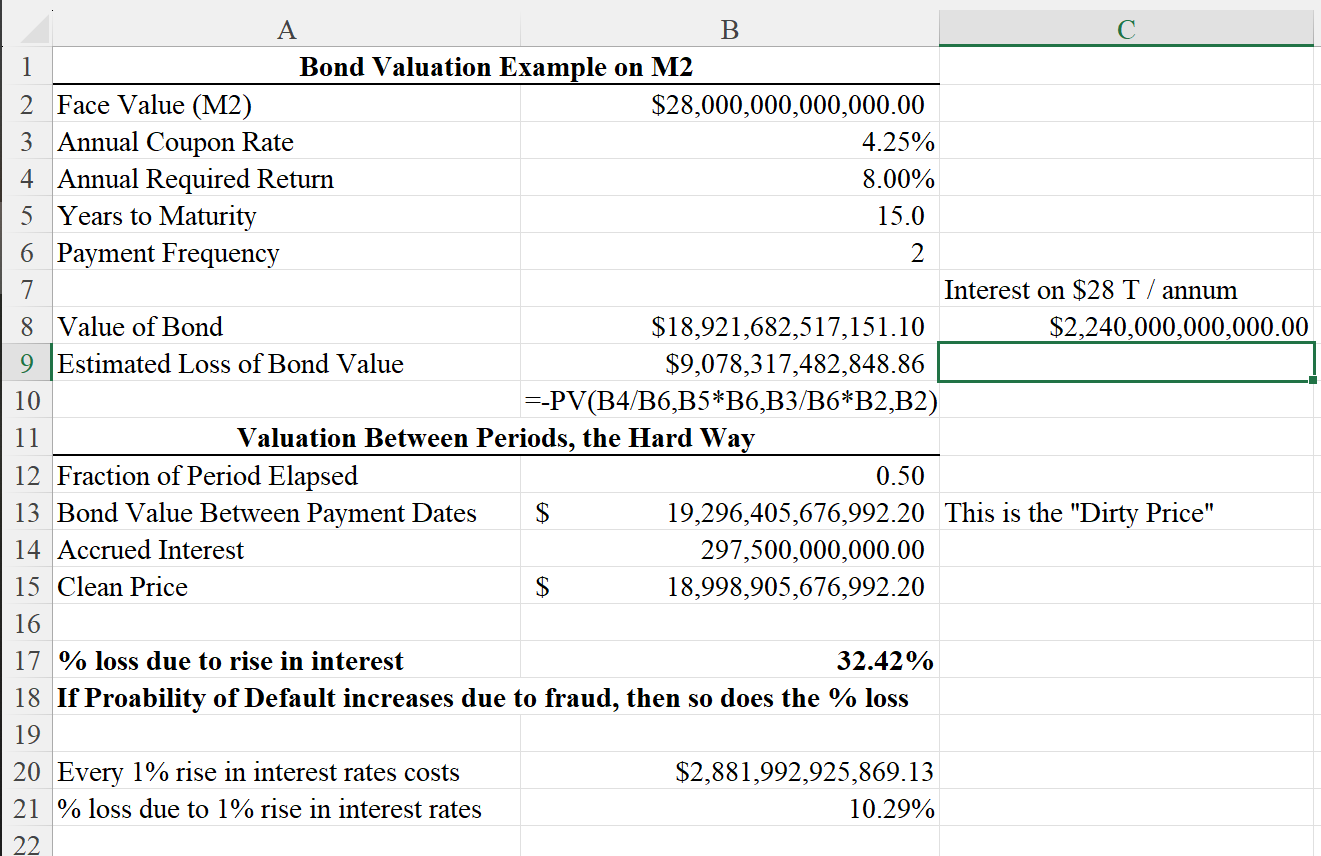
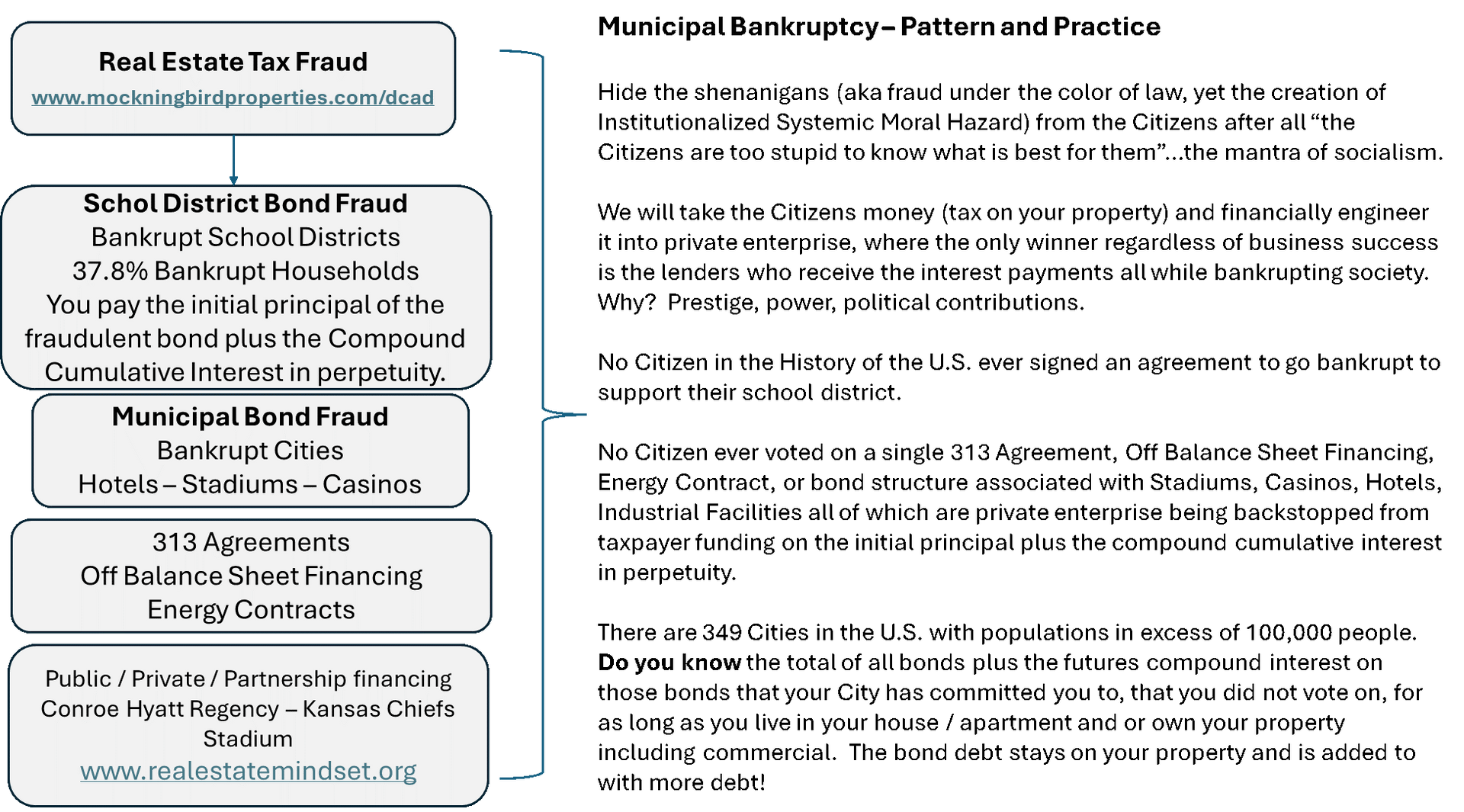
The same issue is stated in the Terminal Failure and the Bond Credibility Chain presentations.
WHEN DELAY BECOMES THE INJURY
A constitutional remedy must be more than theoretically available. Where evidence is perishable, rights are time-sensitive, or governmental action becomes irreversible, the time required to reach the tribunal can determine whether the tribunal can provide meaningful relief at all.
A right preserved after the evidence is gone is not the same thing as a right protected while the evidence still exists.
Does the President have the authority to bring in the military to seize all the voting machines? The hardware boards are foreign, as are the on-board chips, and that is in addition to the other shenanigans and criminal behavior evidenced on pages 82-202 in the 2nd Amendment to the Criminal Complaint (link).
It is a known fact that I am not a fan of Governor Abbott for fraudulent property tax reasons, and yes, I voted for him, but the probability that Governor Abbott lost but for voting fraud and voter fraud is extremely low. Same for AG Paxton.
The principal statutory exception to the Posse Comitatus Act which generally bars use of federal armed forces to execute domestic law is the Insurrection Act, but that authority is aimed at insurrection, rebellion, or situations in which ordinary enforcement of federal law is obstructed—and election fraud of this caliber is treason as well as Deprivation of Rights under Color of Law. I could make the case, as much as it is stomach churning, that this is an Act of War, where the net result is the termination of Constitutional rights including the right for your vote to count.
For suspected election crimes, the ordinary lawful route would be DOJ/FBI investigation, subpoenas, search warrants, preservation orders, forensic imaging, and court-authorized seizure. DOJ itself states that States—not the federal government—administer elections and determine vote validity and tabulation, while DOJ's role is principally investigation and prosecution of federal election crimes.
So, there is an important distinction:
- Could federal agents seize particular voting machines as evidence? Yes, potentially, if investigators establish probable cause and obtain the appropriate warrant or other lawful judicial process.
- Could military technical personnel potentially assist a lawful federal investigation? In limited circumstances Congress has authorized military assistance, but Posse Comitatus sharply constrains direct military law-enforcement activity.
- Could the President simply direct the Army to take every machine in Texas or nationwide? That would face very substantial statutory and constitutional obstacles absent an extraordinary circumstance fitting a specific congressional authorization such as the Insurrection Act. The problem is that the House and the Senate are dysfunctional as a result of no enforcement of the laws. They created a circular issue of being able to protect their actions by their existence in positions to block investigations.
Texas also treats voting equipment and election records as controlled election infrastructure. State law requires certified software, chain-of-custody controls, sealing, equipment inspections, and restrictions on network connections. Those requirements do not immunize machines from a valid criminal search warrant, but they reinforce why seizure would ordinarily proceed through legal process and forensic chain of custody rather than unilateral military action.
The fact that hardware components or semiconductor chips were manufactured abroad does not by itself establish election fraud or compromise. The relevant forensic questions would be much more specific: What boards were used? Who designed firmware? What code was executed? What certification testing occurred? Were hashes verified? Were unauthorized components or communications capabilities present? Did logs show alteration? Do paper records reconcile with machine totals? Those are testable questions.
In the 2nd Amendment to the Criminal Complaint where the Cast Vote Records are documented to have been switched, speed and seizure of all voting machines must be executed immediately. Courts have proven to have gone rogue. DOJ has proven to be ineffective, certainly at speed.
The proper evidentiary approach is the same one I have been using in the book, Terminal Failure: preserve the machines and records, establish chain of custody, compare paper ballots to tabulations, inspect logs and firmware, and test the allegation rather than infer fraud from an unexpected outcome. At a minimum grab every machine in Texas, Ohio, Iowa, Kansas, Maine, North Carolina, South Carolina and California to establish quickly the pattern and practice.
Under normal circumstances I would think, direct DOJ/FBI and appropriate federal cybersecurity/forensic authorities to immediately preserve election-system evidence; obtain warrants where probable cause exists; image relevant machines, logs, firmware, removable media and tabulation systems; preserve paper ballots and chain-of-custody records; and independently reconcile machine totals to voter-verifiable records before evidence can be overwritten or destroyed. However, these are not normal circumstances, the system of adjudication has broken down, and The Constitution of The United States of America itself is under attack.
The issue is speed. These machines need to be taken today. I make this statement because we have the evidence that Cast Vote Records can be modified within hours to hide the footprint of the vote flipping. The only entity that I know of, that has scale to execute, is the Military and National Guard.
Speed is a legitimate evidence-preservation concern. Dealing with the requirements of election officers to retain and preserve covered election records for 22 months, and § 20702 criminalizes willful destruction, concealment, mutilation, or alteration of those records, literally means nothing to those who committed the voting fraud to begin with. In other words, the law presumes the guilty will adhere to the law and that has proven not to be the case. As we evidenced in the 2nd Amendment to the Criminal Complaint, the Cast Vote Records can be substituted out. The machines and paper records / ballots must be seized immediately.
There is also a particularly important speed tool in § 20703: the Attorney General can make a written demand requiring covered election records to be made available for inspection, reproduction, and copying. That does not require waiting months for ordinary discovery. Again, “made available” allows for manipulation. Seizing the evidence stops any potential manipulation in its tracks and the seizing of evidence must be on camera and the machines monitored on camera so there are no issues of manipulation or violations of chain of custody.
So, the concern is that Cast Vote Records, logs, removable media, firmware images, tabulator databases, or related digital records could be altered within hours, the most legally robust emergency sequence would be:
- DOJ immediately issues preservation demands under federal election-record law and any other applicable authority. Too slow.
- FBI/DOJ seeks emergency warrants or preservation/seizure orders where probable cause supports them. Too slow.
- Investigators create forensic images immediately, record hashes, preserve originals, and lock down chain of custody. Too slow.
- Therefore, under the command and authority of the Commander and Chief via the insurrection act, seize the machines, paper ballots, pollbooks, audit logs, tabulation databases, CVRs, EMS servers, removable media, firmware, configuration files, and system logs so they are preserved together so the electronic record can be reconciled against the voter-verifiable record.
- If state or local officials actively obstruct federal law to the point that ordinary judicial enforcement becomes impracticable, then arrest those who are responsible for obstruction under the Insurrection Act.
Section 252 permits the President to use militia or armed forces when unlawful obstruction or rebellion makes it
impracticable to enforce federal law through the ordinary course of judicial proceedings. Section 253 addresses insurrection, domestic violence, unlawful combinations, or conspiracies that obstruct federal or state law or deprive people of constitutional protections while state authorities fail or refuse to protect those rights.
Therefore… Federal law requires preservation → federal authorities demand preservation or obtain orders → officials refuse, obstruct, destroy, conceal, or alter evidence → civilian enforcement is no longer practicable.
The President could therefore lawfully move very fast without beginning with military seizure. DOJ could simultaneously issue preservation demands, seek emergency orders in multiple districts, deploy FBI cyber/forensic teams, coordinate with CISA and other technical personnel, and preserve the evidence at scale. Military technical assistance could potentially support a lawful operation depending on the authority invoked.
A very strong emergency formulation is:
Immediately preserve all election-system evidence before it can be overwritten, modified, deleted, or rendered forensically unrecoverable. Issue federal preservation demands, obtain emergency judicial orders where necessary, forensically image the systems and media, record cryptographic hashes, preserve paper records and audit trails, and place the evidence under independent chain of custody. If any jurisdiction obstructs those lawful federal measures to the point that ordinary judicial enforcement becomes impracticable, evaluate the President’s authority under 10 U.S.C. §§ 252–253.
Having authority on paper is different from having an institution actually use it fast enough to preserve volatile evidence.
The preservation authorities already exist, and delay can, itself, defeat the evidentiary purpose if the records are genuinely volatile.
Section 252 of the Insurrection Act requires the President to conclude that unlawful obstruction, combinations, assemblages, or rebellion make it impracticable to enforce federal law through the ordinary course of judicial proceedings.
The issue is no longer whether federal authority exists. It does. The issue is whether the ordinary federal enforcement process can act before volatile election-system evidence can be modified, overwritten, or rendered forensically useless. If ordinary enforcement cannot preserve the evidence in time, the President must determine what lawful emergency authorities remain available to prevent destruction or loss of evidence required by federal law to be preserved.
One additional point is worth emphasizing: the DOJ itself reports that it has used the Civil Rights Act of 1960 to inspect Texas-held federal election records, with Texas providing the records.
Feel free to disagree,
but where are you going to go to get your Constitutional rights back?