



Metals Moment
Analysis & What Do You Really Own?
By Mitchell Vexler, February 10, 2026
Although my focus is on property tax fraud and school district bond fraud, in an effort to help protect against the theft and erosion of property rights, precious metals including gold, silver and platinum, I am continuing to share my thoughts in videos and writings because they are all connected. Several people sent emails to me asking about investing in gold mining companies, perhaps as part of holding some physical metals. There is a much more important topic that occurs as a result of the idea of investing in “precious metals” companies and that is the emphasis of this Article.
To properly analyze a gold company, evaluate its operational efficiency, financial health, and the quality of its assets. Key metrics to consider include the All-in Sustaining Cost (AISC), Net Asset Value (NAV), and production levels, as these will help determine the company's profitability and risk profile.
Key Steps to Analyze a Gold Company
Operational Efficiency
- All-in Sustaining Cost (AISC): This metric includes all costs associated with producing gold, such as mining expenses, administrative costs, and capital expenditures. A lower AISC indicates better profitability and resilience against falling gold prices.
Financial Health
- Net Asset Value (NAV): This represents the total value of a company's assets minus its liabilities. It helps assess the company's worth based on its gold reserves and other assets.
- Price to Net Asset Value (P/NAV): This ratio compares the company's market capitalization to its NAV. A lower P/NAV may indicate that the stock is undervalued.
Production and Growth Potential
- Current Production Levels: Evaluate how much gold the company currently produces and its operational efficiency.
- Project Pipeline: Investigate future projects, including exploration and development plans. A strong pipeline can indicate long-term growth potential.
Market Conditions
- Gold Price Sensitivity: Understand how changes in gold prices affect the company's revenues and profits. Gold mining stocks often have higher volatility compared to physical gold.
- Geopolitical Factors: Consider how global events, such as trade tensions or economic instability, may impact gold prices and mining operations.
Risk Assessment
- Cost Inflation and Regulatory Changes: Be aware of potential risks that could affect operational costs and compliance with regulations.
By focusing on these areas, potential investors can gain a comprehensive understanding of a gold company's potential and risks. One should not invest in anything if you truly do not understand it and cannot stomach the ups and downs of the investment, which is why learning charts and options is critical to create maximum flexibility with regard to the underlying position.
Companies that one might want to investigate: AU, NEM, B, BHP, RIO, FNV, AEM, MTA.V. plus many others.
Under no circumstances do we make recommendations as we could be wrong. The goal is awareness because of the financial chicanery that has occurred and how to think about protecting one’s wealth.
With regard to the financial chicanery, Jack McPherin of Epoch Times recently wrote an article outlining and questioning who owns the stocks. I borrowed and melded his article into my article, based on my personal experience, to make a very important point.
Most Americans believe that when they “buy” a stock, bond, or exchange-traded fund in a brokerage account, they become the legal owner of that security. The statement shows their name, and the shares appear as belonging to them.
But in the modern U.S. securities system, that intuition is often wrong in the way that matters most: legal title and control. What most investors hold is not a directly owned asset recorded in their name, but a contractual claim—what the law calls a “security entitlement”—against a financial intermediary.
That may sound like semantics until one asks a simple question: in a systemic financial collapse, who is first in line to retrieve those securities? In other words, the difference between owning an asset and holding a claim can determine whether investors’ assets are legally subordinated to other claims, and whether investors recover their assets at all.
The answer depends less on what your account statement says and more on how Wall Street’s plumbing and a little-known uniform state law which governing securities ownership, was built to perform under stress.
The Invisible Owner of Record
For most of the history of securities markets—from English common law through much of the 20th century—investors who bought shares were recognized as their legal owners, often holding certificates in their own name. Trades were slower, more cumbersome, and paper-intensive, but ownership was straightforward. If you bought shares, you were typically the registered owner by default.
That is no longer how most securities ownership works.
The modern system is built around a centralized clearing and custody structure dominated by the Depository Trust Company (DTC), a privately owned institution controlled by the largest U.S. banks and broker-dealers. In broad terms, major brokers and banks “deposit” investors’ securities at the DTC, which holds them in pooled form.
The registered owner reflected on issuer records is typically not the end investor and often not even the brokerage firm the end investor uses. It is DTC’s nominee, Cede & Co.
Here is the practical consequence: when you “own” a stock through a brokerage account, you are generally what is called a “beneficial owner” credited on your broker’s books. The owner of record is upstream, and the securities themselves sit in a centralized system designed to reduce costs and manage institutional risk—rather than to preserve clear, direct ownership for ordinary investors.
If that sounds like a technicality, think of the difference between owning a car and leasing a car. A lease can give you many of the benefits of use, but it is not the same legal relationship to the underlying property. In the same way, a security entitlement can provide financial benefits from an asset while leaving the investor multiple steps removed from legal title and direct control.
This distinction, quietly normalized over decades, has created a fragile kind of “ownership” that many investors do not understand and that policymakers have not adequately confronted.
The modern financial market structures may put investors at serious risk during moments of systemic financial stress.
The Legal Structure That Decides Priority
Wall Street’s indirect holding system might be defensible if it merely replaced paper certificates with electronic records while preserving the investor’s core property rights. But that is not what happened. The deeper shift occurred in the law that governs these relationships being Article 8 of the Uniform Commercial Code (UCC)—which has been amended and adopted by every state legislature in the country. In plain English, UCC Article 8 establishes that the securities credited to customers at a brokerage are generally not supposed to be treated as the brokerage firm’s property. That sounds comforting, until one reaches the key exception clauses in the statute, which clearly states that under certain conditions, a broker’s secured creditor gains priority over the assets of the broker’s customer. This is not a fringe interpretation. It is explicitly stated in the law itself, which has been sharply criticized by leading securities law scholars. If a broker pledges its customers’ securities as collateral and their creditor gains legal “control,” that creditor stands ahead of the customers who bought the securities. Crucially, this applies even if brokers have acted improperly or illegally, as long as collusion with the creditor cannot be proven.
To most people, that should feel backward. If you pay for an asset, you should not lose it because your middleman used it—properly or improperly—to fund its own survival.
But under the modern regime, what many customers have is not a direct, registered ownership interest in a specific, identifiable security. Instead, they have a contractual claim defined by the intermediary system and the priority rules that put banks first during an economic crisis.
‘Customer Protection’ Is Not the Same as Ownership. Defenders of the current structure will point out that there are rules intended to protect customer assets. They are right. There are segregation requirements, reporting requirements, and oversight mechanisms. There is an entire framework that assumes customer property can be kept separate from a failing firm’s creditors.
The problem is that rules are not self-enforcing, especially in a crisis. And history shows that when financial firms face existential pressure, the temptation to treat customer property as a lifeline can become overwhelming.
I witnessed this nonsense first hand in a massive bankruptcy due to embezzlement and saw the amount of money that was lost, even though that money was in a cash account and not even in stocks held by PFG, https://en.wikipedia.org/wiki/Peregrine_Financial_Group.
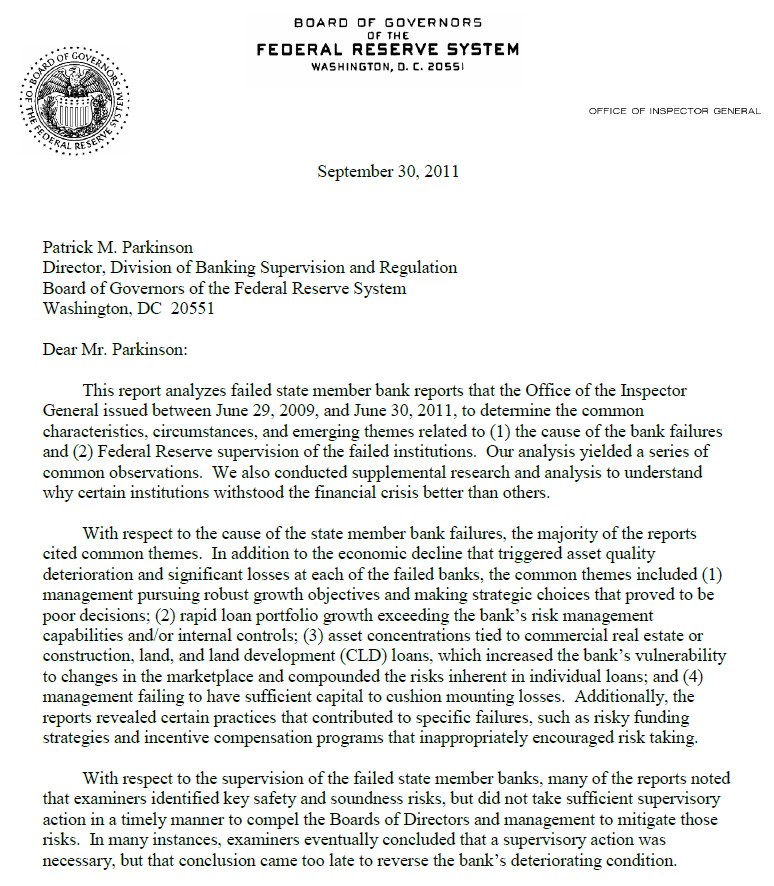
The collapse of Lehman Brothers further illustrates the danger. In the years leading up to its failure, Lehman routinely violated customer segregation requirements by pledging customer securities to JPMorgan Chase to secure its own borrowing. When Lehman collapsed in 2008, JPMorgan asserted secured claims over those assets, freezing large quantities of customer property inside the bankruptcy estate. Many customers did not receive their assets for nearly five years as secured creditors litigated priority over pledged customer assets.
Lehman was not an isolated case. In 2007, Sentinel Management Group commingled and pledged hundreds of millions of dollars in customer securities as collateral for a revolving credit line, triggering years of litigation over whether a bank’s secured claim could override investor rights. Most customers were not made whole for nearly a decade.
And in 2011, MF Global filed false segregation reports and unlawfully tapped segregated customer accounts to meet margin calls, leaving tens of thousands of customers without access to funds they relied on for routine operations. Even when recoveries eventually occurred, the process took years.
Of course, in every one of these instances, attorneys were paid hundreds of millions to muddy the waters which siphoned off the return of the capital to the innocent.
These episodes differ in detail, but they share a theme: protections that investors assume to be absolute can fail in practice. And when they do, investors can be thrown into prolonged legal uncertainty. Even a “successful” recovery can be devastating when retirement savings, liquidity, or margin collateral are frozen for months or years.
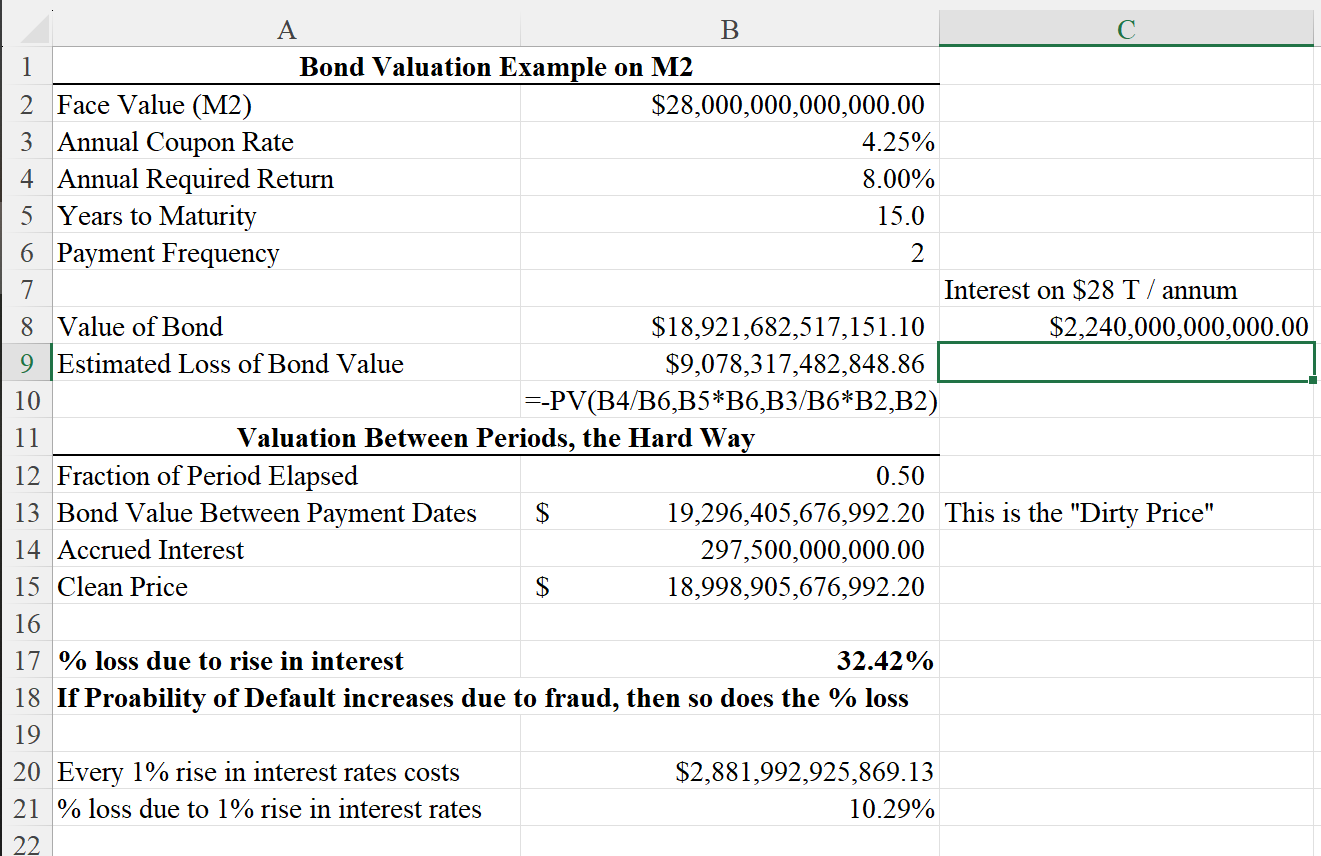
Some readers may point to the Securities Investor Protection Corporation (SIPC) as a safeguard. SIPC does provide limited insurance when a brokerage firm fails. But like the Federal Deposit Insurance Corporation (FDIC) for banks, it was designed to manage isolated insolvencies—not systemic financial crises. Its reserves total less than $5 billion, a minuscule number compared to the tens of trillions of dollars held at major brokerage firms. More importantly, SIPC cannot prevent customer assets from being frozen or subordinated while insolvency proceedings unfold.
The uncomfortable truth is that “customer protection” in an intermediary system is not the same as being the registered owner with clear property rights. It is a set of promises and procedures that depend on compliance, monitoring, solvency, and the willingness of institutions to follow the rules when doing so is more costly than breaking them.
None of this is an argument for widespread panic, nor a claim that every investor is doomed. It is a diagnosis of a real property-rights vulnerability embedded in the architecture of modern finance.
If policymakers want markets that are resilient in the next crisis, they should start by being honest about what most investors actually “own.” Clear disclosure, access to direct ownership for those who want it, and a reexamination of legal priority rules that place intermediaries ahead of customers are not radical demands. They are basic questions of property rights, investor protection, and trust.
Financial systems run on confidence, and confidence cannot rest on assumptions that quietly collapse when stress arrives.
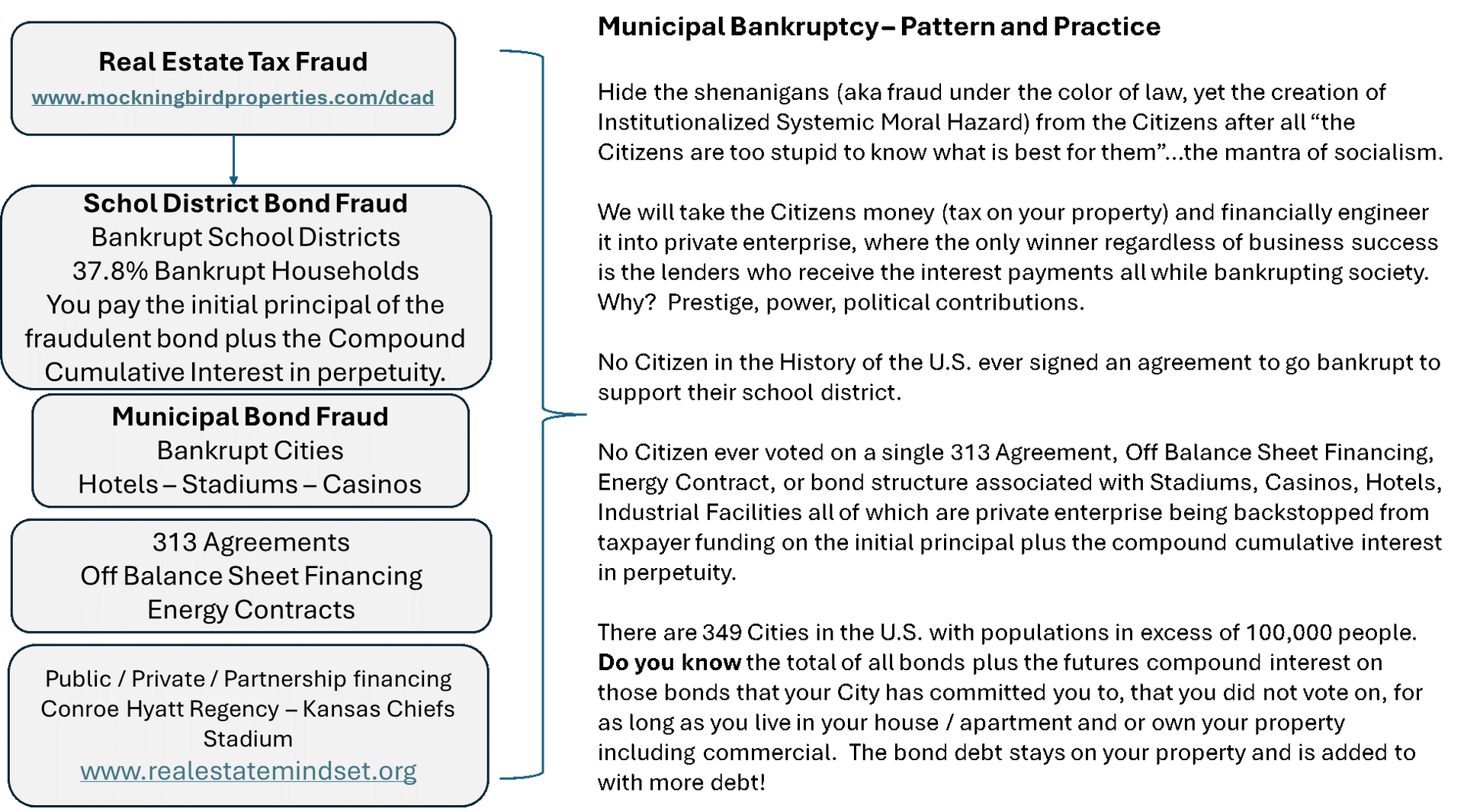
The above described situations are made even worse when the cross collateralization of what are supposed to be independent banks and lenders is taken into account. Then add on top of that the highly leveraged shadow banks. Now add on top of this, the recent Articles I wrote at https://www.mockingbirdproperties.com/dcad#ArticlesLettersDiscussions and the potential for financial devastation due to unseen and seldom discussed financial chicanery is laid bare.
The Very Important Point:
If it is not in your hands, you do not own it! Caveat Emptor…Buyer Beware.