

Crisis of Confidence
By Mitchell Vexler, December 12, 2025
What is the connection between Bitcoin, Trading, Federal Reserve, the Texas statewide investigation of over taxation, socialism, the repeal of property tax, and Precious Metals?
In a recent video with Daniela Cambone, and in a few past videos with Travis Spencer, when I voiced my opinion that Bitcoin is purely speculative until it is backed by a commodity, a few people asked why. In these videos there is never enough time to delve into the depth of issues and, generally, my focus is on the repeal of property tax in favor of the Uniform States Sales Tax. With that said, there is an opportunity to answer the question as to why, in my opinion, Bitcoin and many other coins are speculative, until backed by a commodity or group of commodities.
For those interested in the math of Bitcoin:
https://www.coindesk.com/markets/2014/10/19/the-math-behind-the-bitcoin-protocol
Back in 2010, following the release of Bitcoin trading in January of 2009, I was curious and decided to study the business model and thus the math of Bitcoin. My conclusion was that the concept of the private and public key method of calculation (aka the Protocol) which includes the scalar multiplication was extraordinarily good. Further, the stated purpose of decentralization of financing was ideal given the 2007 mortgage-backed securities crisis and the fact that economic crises are occurring at a faster pace, meaning the cycles are getting closer. The concept and viability were recognized. However, Bitcoin was not truly tradeable being both long and short until December 2017, and even then, not every brokerage firm would allow shorting. From the standpoint of trading, for me, that raises a red flag. Then the news, manipulation, and hype kicked in, and my internal counter to all the noise was...what is Bitcoin and what is its true worth if one wants to own it? Is Bitcoin an asset, or is it a speculation under the belief it may become an asset? Is Bitcoin decentralized as conceived?
An asset is anything owned by an individual or business that has monetary value and can provide future economic benefits. This includes both tangible items like cash and property, as well as intangible items like patents and trademarks. Is Bitcoin, today, an asset? Yes.
But what is the value of the asset? This is where it gets interesting. Price is what you pay, and value is what you receive. As of recent, Bitcoin can no longer be considered decentralized as the U.S. government has established a Strategic Bitcoin Reserve, which was announced by President Trump in March 2025 to treat Bitcoin as a national reserve asset. This reserve will be funded by Bitcoin already owned by the federal government, with the aim of positioning the U.S. as a leader in digital assets. Does the U.S. Government intend to control and or demand the exposure of the Bitcoin leger transactions? Does the U.S. Government intend to turn Bitcoin into a digital currency to replace the U.S. Dollar? Why would Bitcoin be considered necessary to replace the U.S. Dollar? Is Bitcoin itself a commodity? Is the interest of the U.S. Government investing in Bitcoin, and other digital assets such as Ethereum, Solana, and Cardano, a part of its strategic approach to digital assets, that is being done to generate revenue to pay down the U.S. National Debt or to shore up the balance sheet with inflated asset prices to bring the debt to GDP down? When analyzing business models, having the answers is crucial, and in addition to the above questions, I have more questions.
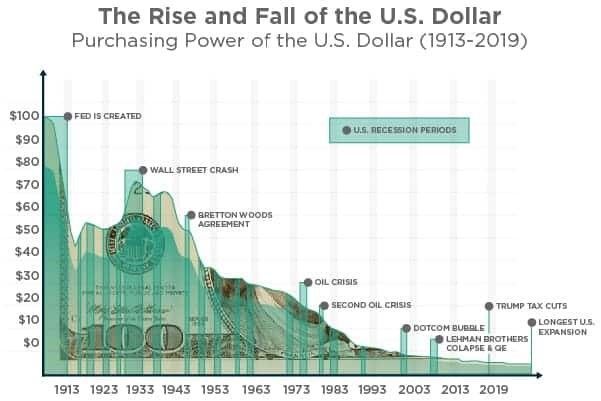
Given the fact that the purchasing power of the U.S. dollar has decreased by 97% since 1913 when the Feder Reserve was created, and we are now faced with the high probability of the necessity of printing more money, for what purpose is the U.S. Government investing in these coins?
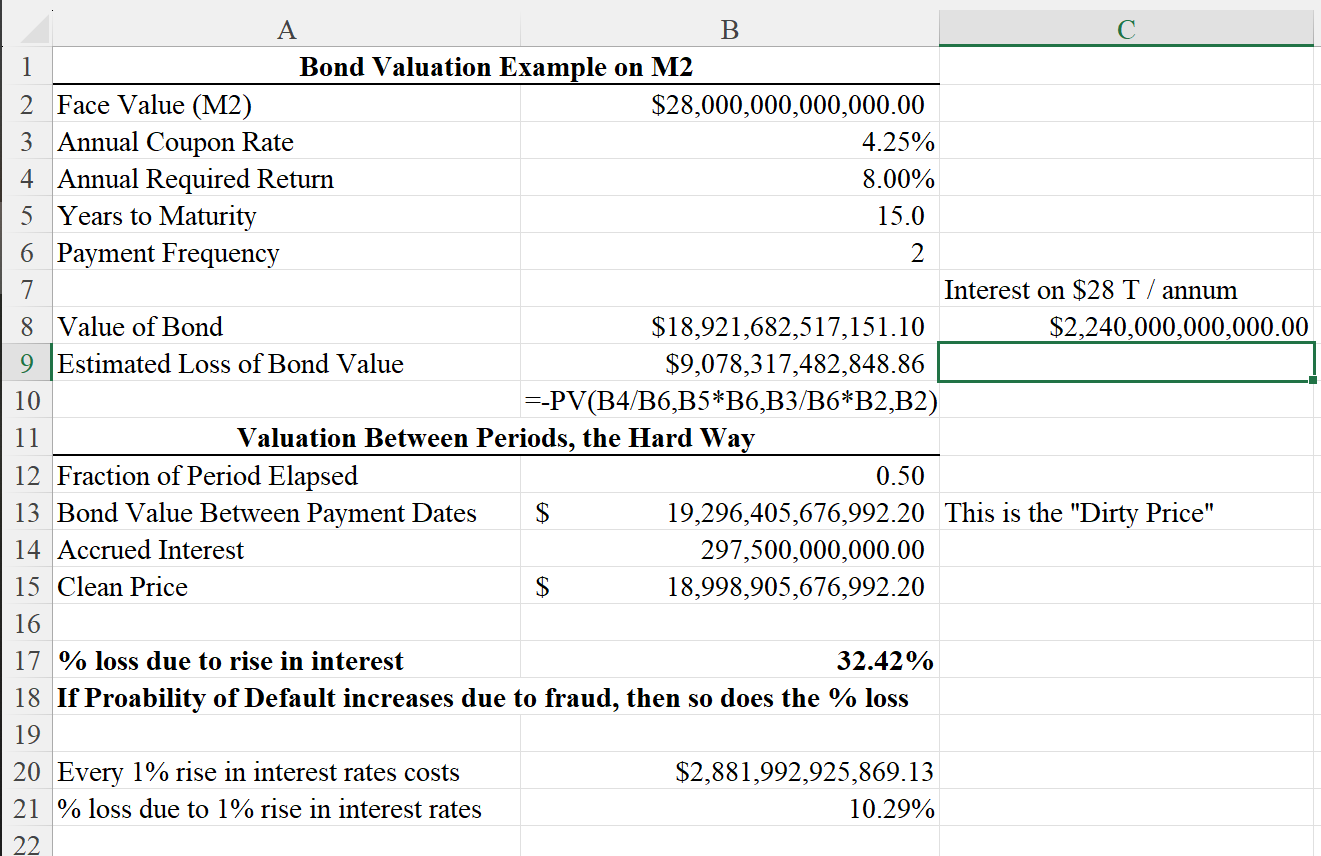
For a “coin” to have true value, not of a speculative nature, it should / could be backed by commodities such as what Tether has done backing its value with precious metals, U.S. Treasuries, and also Bitcoin. Why is Bitcoin not backed by commodities, which would smooth out the volatility of Bitcoin’s market pricing? A trader who has the money to trade Bitcoin can do well. An investor, who bought into the hype early and held, has done well but also has had to withstand 50% pullbacks which is very difficult to stomach. If an investor was a trader who could long and short intraday while holding the underlying, that combination would be very interesting. However, most people do not fit these descriptions or have the skill-set necessary to engage, so what are people speculating in? Would Bitcoin even exist but for the probability that a new currency or digital method is necessary to cover the fraud of the Federal Reserve printing money to pay for interest on fraudulently created principal expenses which has driven the debt to GDP over 120%?
Price is what you pay, and value is what you receive. Therefore, given the above questions, what exactly is value of Bitcoin or any coin not backed by a commodity such as precious metals, corn, soy, beef, lean hogs, sugar, and wheat, all of which are futures and are tradeable with instant price discovery?
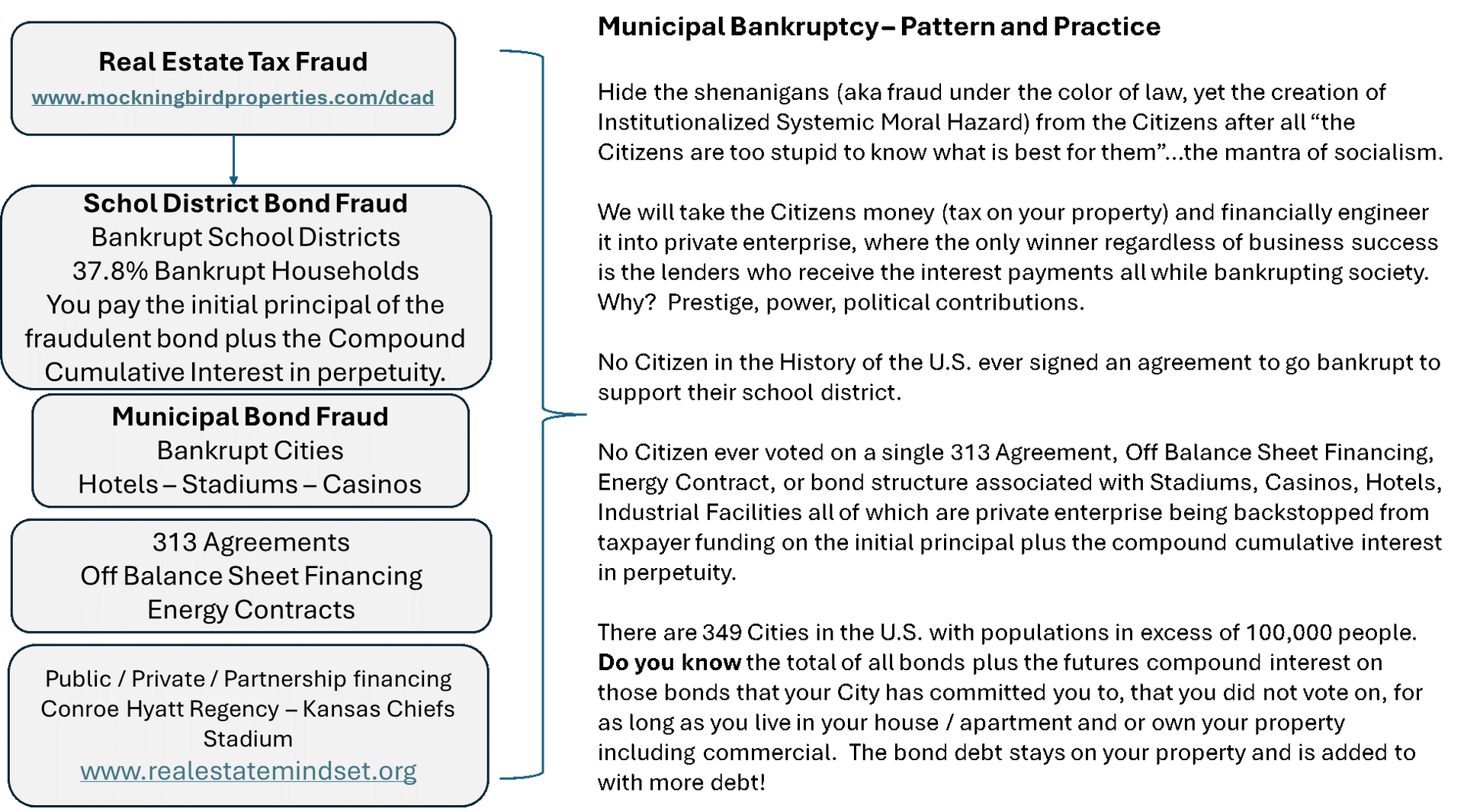
Now to these questions, let’s add the recent announcement by Attorney General Paxton wherein a statewide investigation to over 1000 “Texas cities”, which should have included school districts with regard to the over taxation, is allegedly going to be conducted. The release from the Office of the Attorney General is poorly written and weak as it points to the municipalities and is intended to point to the school districts where roughly 83% of the tax receipts go. I don’t know if this is intentional, or if the people who wrote it, do not understand, but either way, the issues we have brought forth in criminal complaints, law suits, and now at the Supreme Court of Texas are being recognized for what it is, which is the property tax fraud being committed by the Central Appraisal Districts at the command of the School Districts, which are committing accounting fraud and bond fraud. (Here's the a link to the press release,
So far in this Article we have discussed Bitcoin, Trading, Federal Reserve, the Texas statewide investigation of over taxation.
Socialism is the means of distributing goods (produced by others) under the auspices of owned collectively by a centralized government that often plans and controls the economy. Socialism was the creation of a drunk, and it has never worked in the history of the planet because socialists produce nothing but transfer wealth from those who earn it to those who produce nothing, meaning themselves, the socialists. Socialism creates chaos.
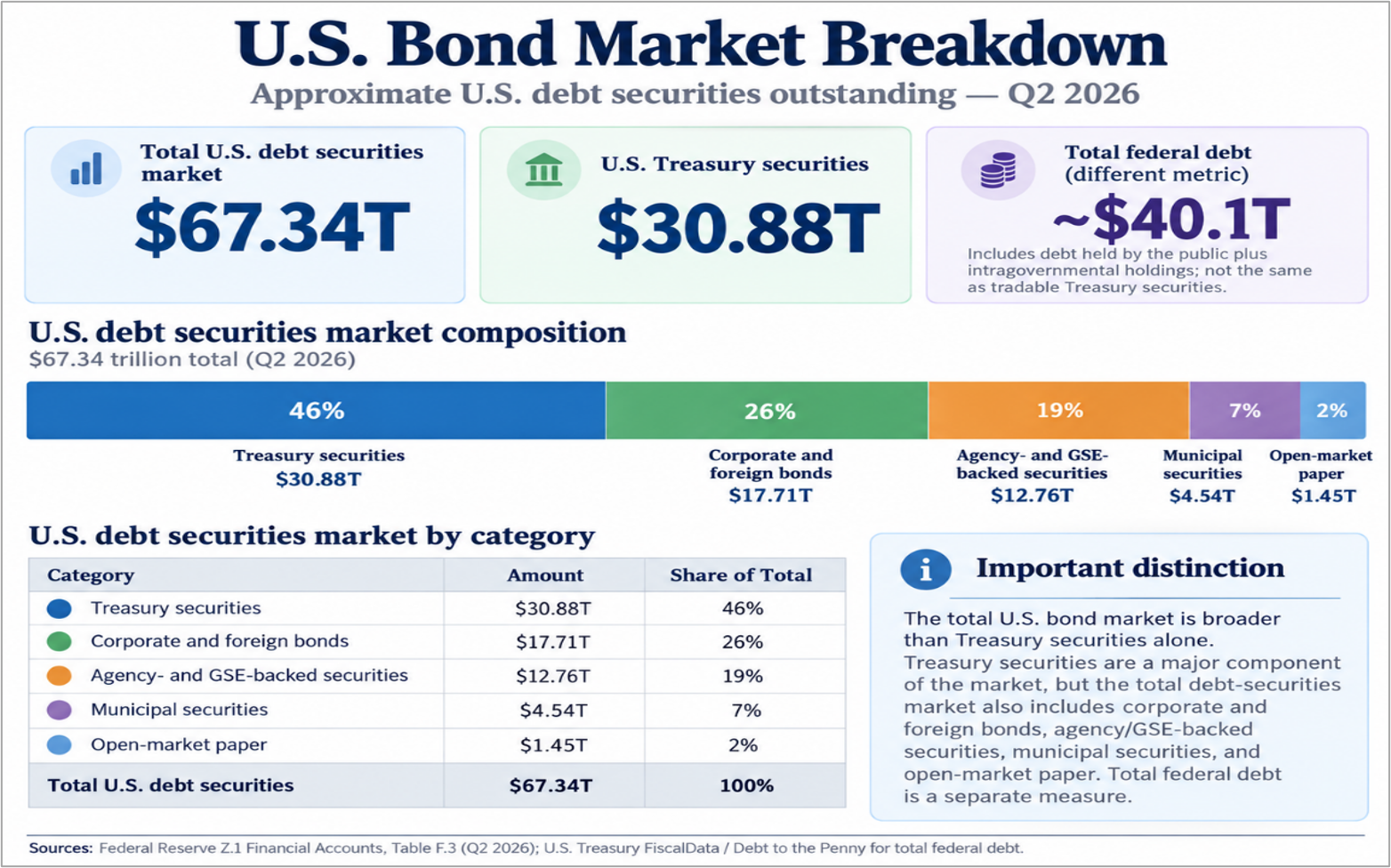
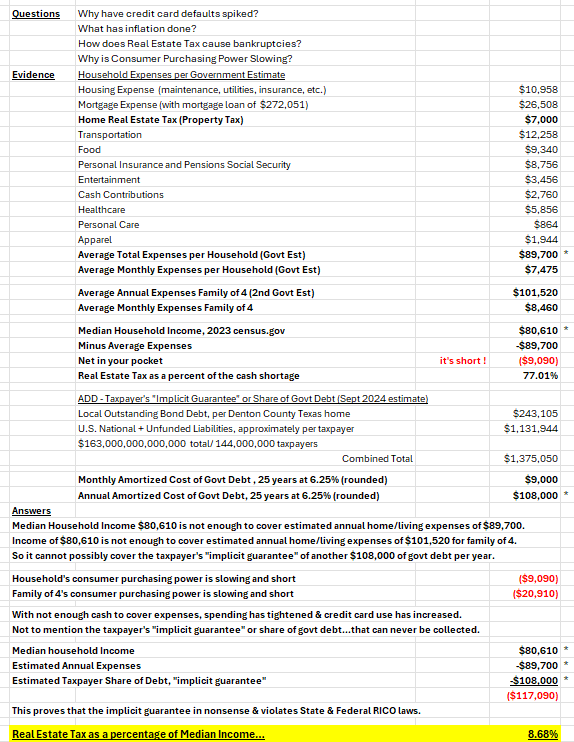
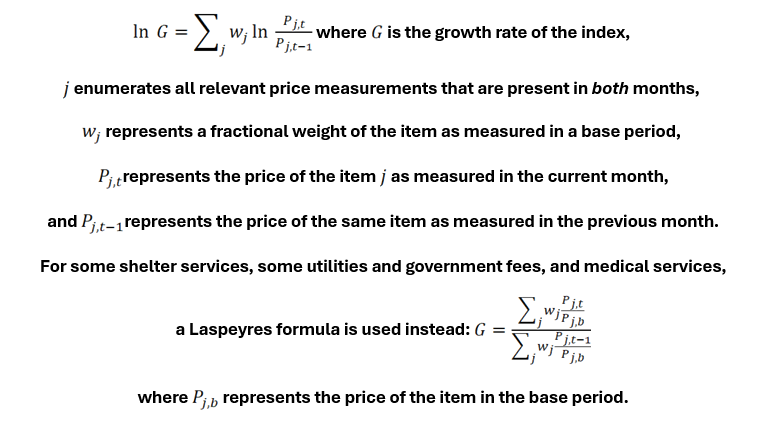
How is it that property taxes have gone up over 100% in 5 years when according to the Federal Reserve inflation in the last 5 years was short of 15%. The answer is 85% fraud created by the school districts and CADs. This is transferring your money (tax dollars) based on the fraudulently created value of your property to the pockets of the school districts of which the CADs are at a minimum aiding and abetting a criminal conspiracy to defraud. Then the school district bonds, where your property is the collateral for the bonds’ principal and interest, under which you are paying roughly 8.6% of your gross income (your property tax bills), which is commanded to continue the fraud because the median household income does not exist to pay off the bonds, or the outstanding compound cumulative interest. Isn’t it interesting that this is the definition of not just fraud but of socialism??
So, how does one protect themselves? First, be the advocate and join others to insist that property taxes be repealed in favor of the Uniform States Sales Tax which returns the balance sheet to the property owners such that when the property is paid off it is 100% theirs, and this stops the Equity Stripping that has occurred. See various articles posted and supporting documentation at https://www.mockingbirdproperties.com/dcad#ArticlesLettersDiscussions.
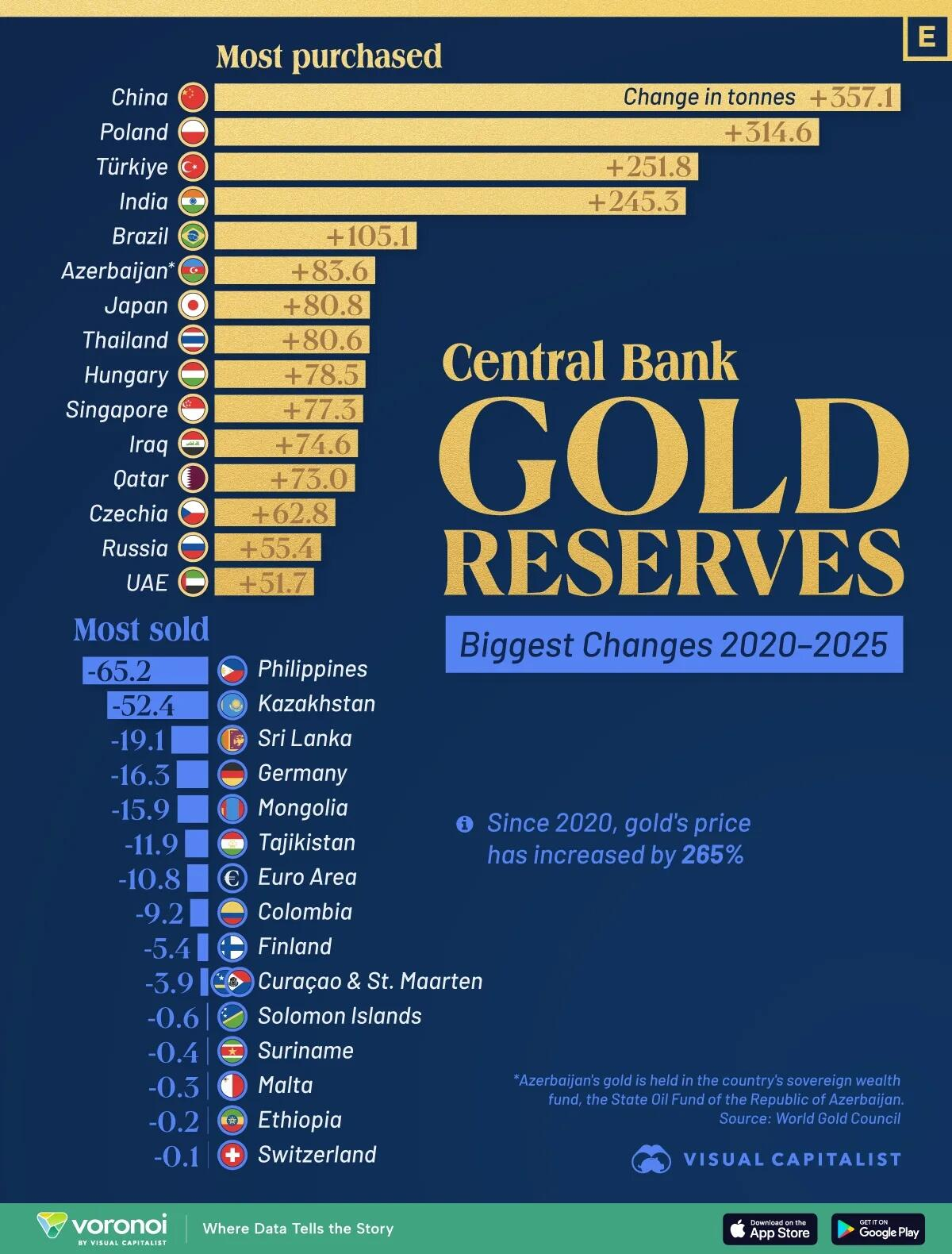
People can do as they please with regard to investing in Bitcoin or any other coin. However, perhaps a blended percent of portfolio is more appropriate. Gold has been valued by humans for thousands of years, with its use dating back to ancient civilizations like Egypt around 3000 BC, where it was crafted into jewelry and used in burial artifacts. The first known use of gold as currency occurred in Lydia around 564 BC, leading to its widespread adoption in trade and as a symbol of wealth throughout history. Generally speaking, precious metals have kept pace with inflation. “Coins” have existed since 2009 and as shown above, have more questions than answers.
What is the real underlying problem connecting the issues of Bitcoin, Trading, Federal Reserve, Texas statewide investigation of over taxation, socialism, repeal of property tax, and Precious Metals, raised in this Article?
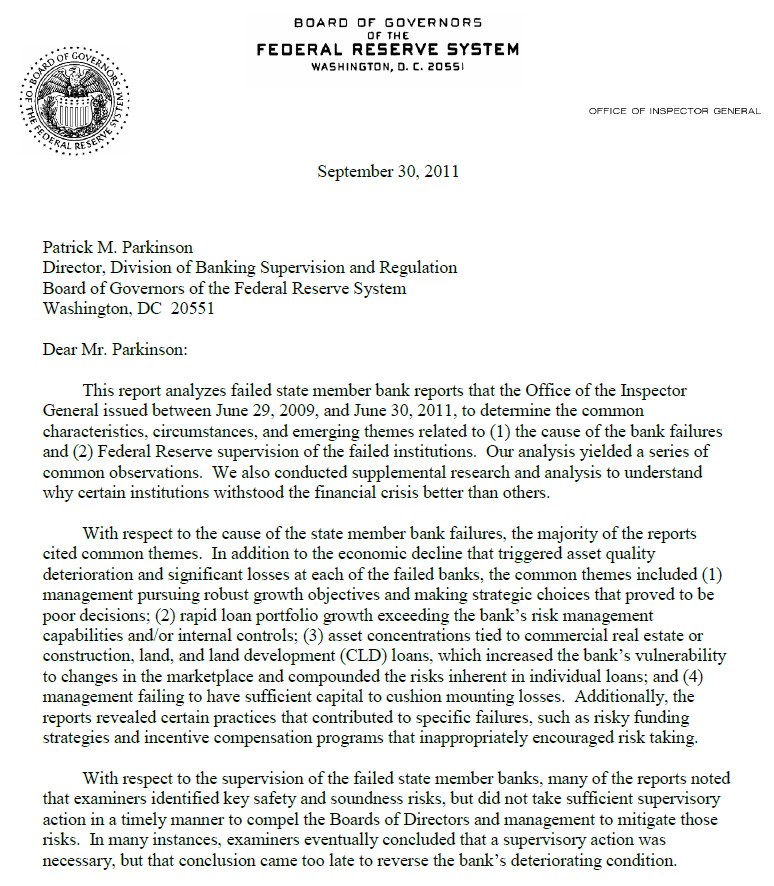
The real problem is a Crisis of Confidence. A crisis of confidence refers to a situation where individuals or society lose faith in their ability to achieve goals or trust in institutions, leading to feelings of doubt and uncertainty about the future. Both State and Federal governments have allowed for the creation of Institutionalized Systemic Moral Hazard, where the black letter of the law is ignored in favor of ignoring and promoting the continued fraud of printing money at the Federal level and overvaluation and over taxation at the State level, both of which create inflation, which is a hidden tax. Printing money and creating compound interest on that printed money causes the transfer of wealth from those who earned it to those who did not (government and banks), and that is the definition of socialism.
There are solutions which can, and should, be painful including compound cumulative interest roll back, debt jubilee, bankruptcy of the school districts, bond devaluation etc. The underlying point is, do you trust the banks given the propped-up values based on the fraud of printing money and overvaluation? Remember your money becomes their money when you deposit your cash. Remember the U.S. Government instituted the bank bail-in which allows a failing bank to convert its debt into equity to stabilize its finances, using funds from its creditors (you) rather than relying on taxpayer money. This approach was introduced to prevent bank failures without government bailouts, ensuring that the financial burden falls on the bank's creditors instead of the public.
Therefore based on the Institutionalized Systemic Moral Hazard which creates the Crisis of Confidence, regardless of political party affiliation, would you rather have financial security of a 5,000 year old proven commodity, in your personal possession, even if buried somewhere, or would you like to be in Bitcoin, that is not tied to any commodity yet? Food for thought. However, one should recognize that either scenario is a result of a Crisis of Confidence and we are all the pawns in the government’s game of socialistic monopoly.