

Vexler's lawsuit interferes with our ability to commit fraud!
By Mitchell Vexler, February 20, 2026
While waiting for the response from opposing council as requested by the Supreme Court of Texas, to which we will respond to the response, I keep thinking that perhaps SCOTX now sees the issue which can be broken down as follows:
How can the administrative process, under Administrative Law, lead to fraud?
Ultra Vires is a due process violation. (A)
An Ultra Vires action is outside of Administrative Law. (B)
If fraud can occur under due process (as stated and claimed by opposing counsel) then that must be a due process violation. (C)
The net result is a State “taking” without due process which is mass fraud upon society by ignoring both Ultra Vires and Administrative Law. (D)
If A = B and B = and C = D, then A = D
The statute cannot be defended because the result is fraud.
The Appraisal process cannot be immune from scrutiny.
Definitions:
Administrative Law is a branch of law that governs the activities of government agencies, including their rulemaking, adjudication, and enforcement of laws. It ensures that these agencies operate within the law and provides a framework for the public to challenge agency actions.
Ultra Vires is a Latin term meaning "beyond the powers." In law, it refers to actions taken by a corporation or government that exceed the legal authority granted to them, making those actions invalid.
Due process in law refers to the legal requirement that the government must respect all legal rights owed to a person, ensuring fair treatment through the judicial system. It is primarily enshrined in the Fifth and Fourteenth Amendments of the U.S. Constitution, which protect individuals from being deprived of life, liberty, or property without appropriate legal procedures.
"Taking" refers to the government's seizure of private property for public use, which can be either a physical taking (actual occupation of the property) or a regulatory taking (where regulations severely limit property use). The Fifth Amendment requires that just compensation be provided to the property owner for such takings.
Property refers to anything that can be owned by a person or entity, encompassing both tangible items like land, buildings and cash (real property) and intangible items like stocks, copyrights and equity (personal property). It includes the rights to use, control, and transfer these items.
The Importance of the Vexler Case in Texas and across the U.S.
- There is no redress in the case of fraud committed against a property (residential, land, or commercial) and its owner, by a taxing authority created under the appraisal review statute to show how the fraud has been created and manipulated to obtain resolution.
- The Appraisal process, as claimed by opposing counsel, disallows investigation of fraud in the process which negates the very existence of Uniform Standards of Professional Appraisal Practice rendering the entire appraisal industry from American Institute of Real Estate Appraisers and the Appraisal Foundation meaningless because any Central Appraisal District can chose to override the requirements, laws, and math that would be the legitimacy of the valuation.
- The statue, as unilaterally interpreted and exercised, prevents the discovery of fraud.
- There is no due process, as unilaterally interpreted and exercised, of structured review.
- Constitutional Question: Can the Legislature or lower courts constitutionally bar judicial review of systemic fraud claims by confining them to an administrative scheme that lacks discovery, subpoena power, or fraud-adjudication authority?
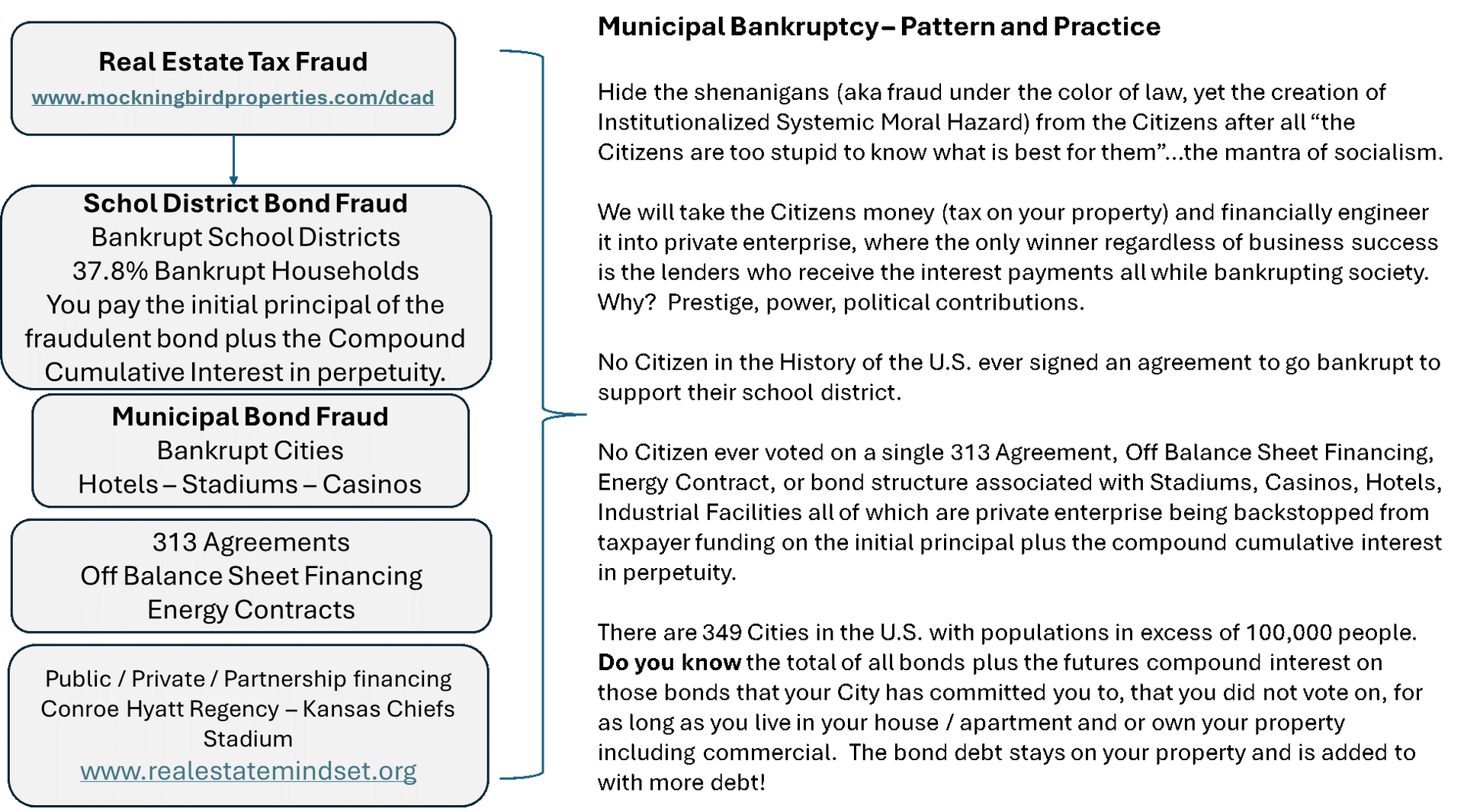
- Why Should the Supreme Court of Texas Care: This is a classic “open courts” problem—if Appraisal Review Boards (ARBs) [same as Board of Equalization] are the exclusive forum and the Chief Appraiser is allowed to commit fraud wherein Ultra Vires is not enforceable (as claimed by opposing counsel), then property owners have no meaningful remedy for fraud. That is exactly the type of constitutional anomaly the Supreme Court of Texas exists to resolve. This is exactly the type of constitutional anomaly the Supreme Court of any State exists to resolve. The pattern and practice of intent to defraud is laid bare in any jurisdiction that claims to adhere to Uniform Standards of Professional Appraisal Practice. In Texas, the system itself, the Central Appraisal Districts (CADs), the IAAO (International Association of Assessing Officers), the TAAO (Texas Association of Assessing Officers), the Attorney General under the Texas Education Act, the State Comptroller under its oversight responsibilities and Property Valuation Study, and many others, violated the very laws and framework they are supposed to represent. These violations have enabled the fraud to start and to grow and are now necessary in order to feed the compound cumulative interest on the fraudulent school district bonds.
Again, I have stated in writing and on video many times, either the law exists, or it doesn’t.
No Constitutional Entity can allow fraud to escape.
Here is the most important question for opposing counsel representing the CAD, its employees, and counsel itself, as an officer of the court:
If you don’t intend to allow the resolution and discovery by every Texan with regard to the property tax fraud and related school district bond fraud being committed upon them, why is that?
This question is applicable across the U.S. in all counties (all appraisal districts) claiming to adhere to USPAP where the evidence proves the opposite.
No government (State or Federal) in the history of the planet can outrun the Rule of 72.
No government (State or Federal) can outrun the reverse amortization which is exactly what they created via the fraud. Compounded school district bond fraud which creates compound cumulative interest on top of the compounded bond fraud.
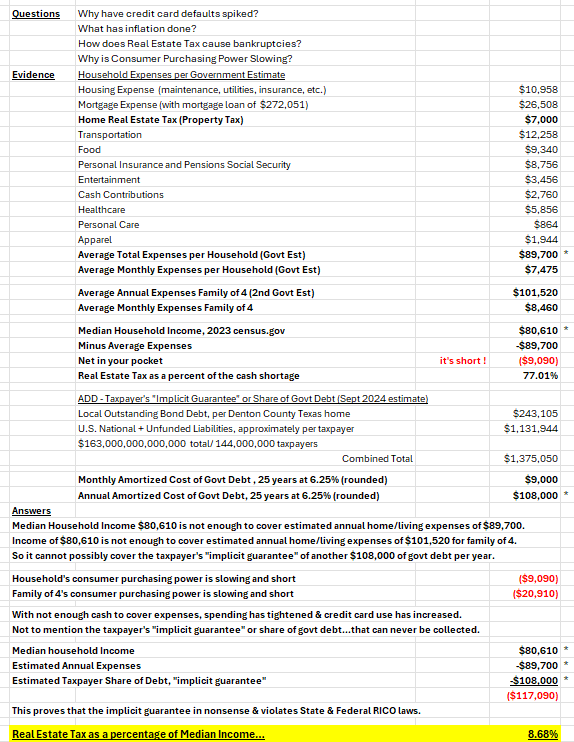
Although SCOTX is confined to Texas, this issue is a national issue because the pattern and practice of overvaluation and over taxation to feed the fraudulent school district bond debt is national. Tens of thousands of people have lost their homes due to property tax lien foreclosures. Over 42,000,000 households across the U.S. are in harms way of bankruptcy or losing the roof over their head as a result of this overvaluation and over taxation which was created to feed the fraud.
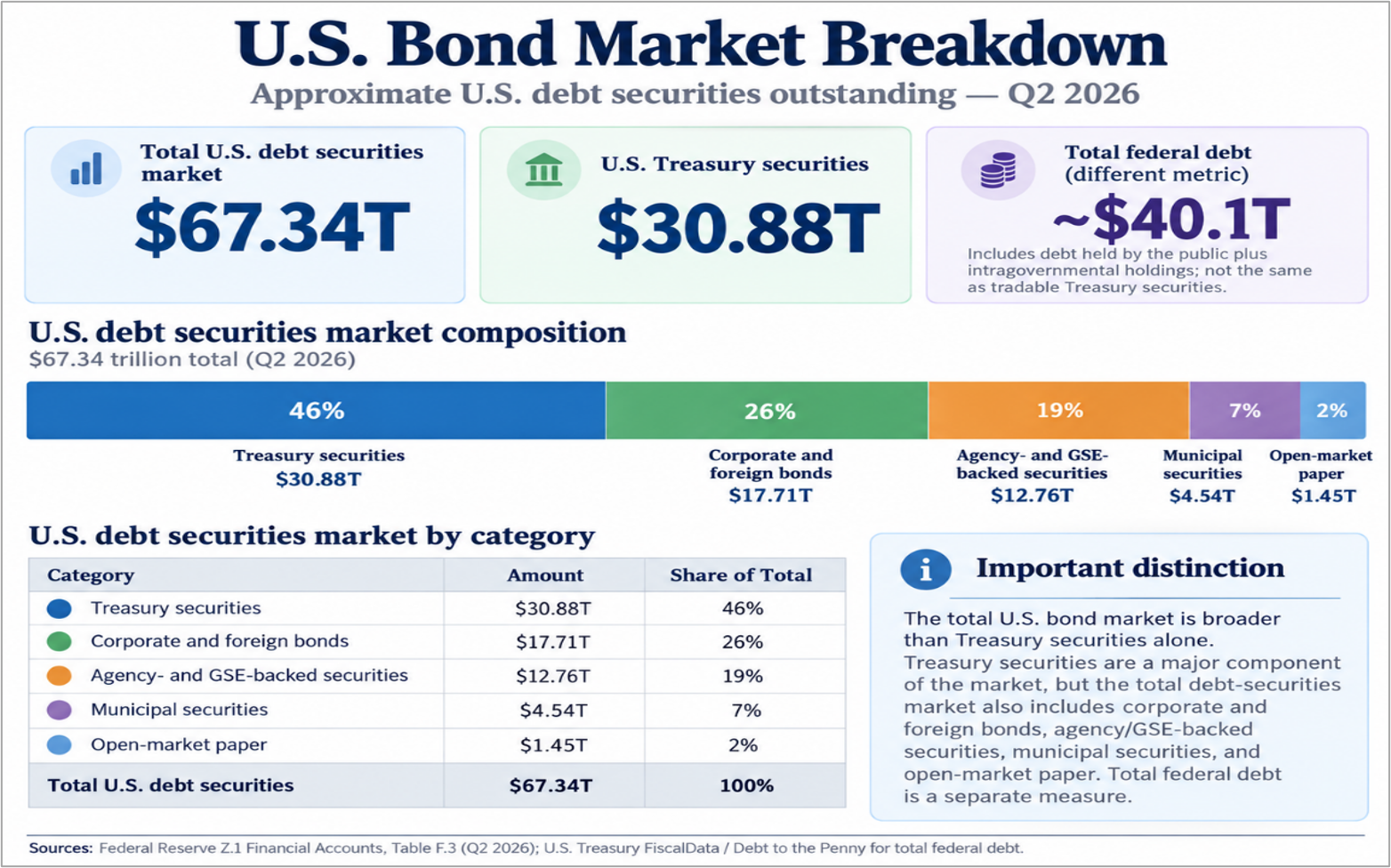
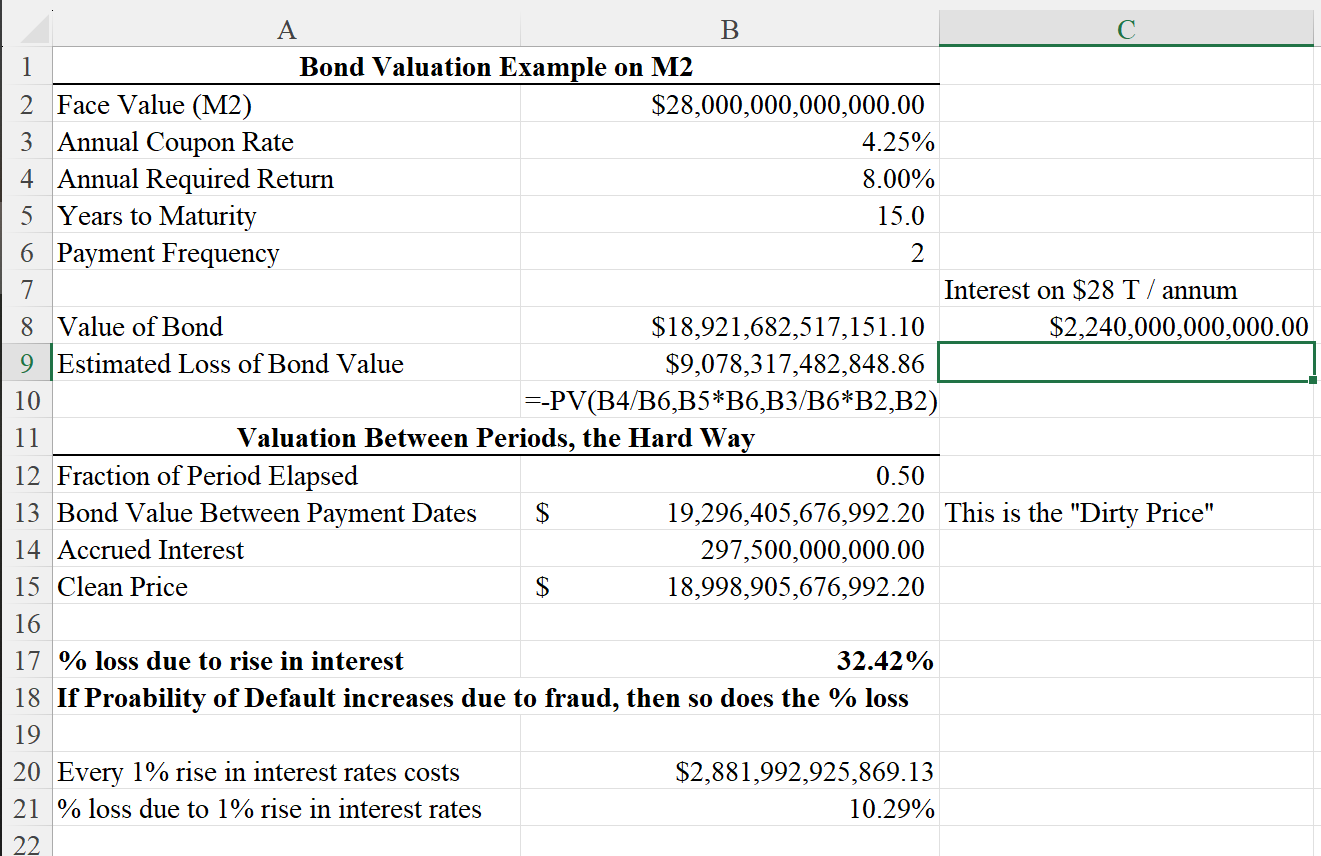
Bonds are part of the federal market, as they are often issued by the government to raise funds. When the government needs money, it sells bonds to investors, who lend money in exchange for regular interest payments and the return of the principal at maturity. Given the nature of the fraud, the government participants in the fraud, the scale of the fraud, and the compound cumulative interest being larger than the original fraudulent principal of the bonds, what are the bonds truly worth?