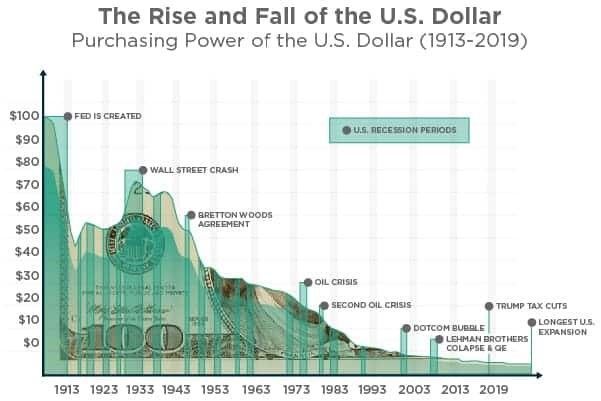


There was no income tax until 1913.
By Mitchell Vexler, March 31, 2026
Link to corresponding graphics, titled The Shadow Ledger
There was no income tax until 1913.
That was the same year the Federal Reserve was created.
Coincidence? – I think not!
Accounting Fraud? – Guaranteed.
Let's review:
- the current financial health of the U.S. & its people,
- the historical counts provided by Erased Evidence, and
- the actual words of Robert F. Kennedy.
Consider the following with regard to the current financial health of the U.S....
(Vegas “BONDGATE” Symposium Presentation, Graphic Slide Edition),
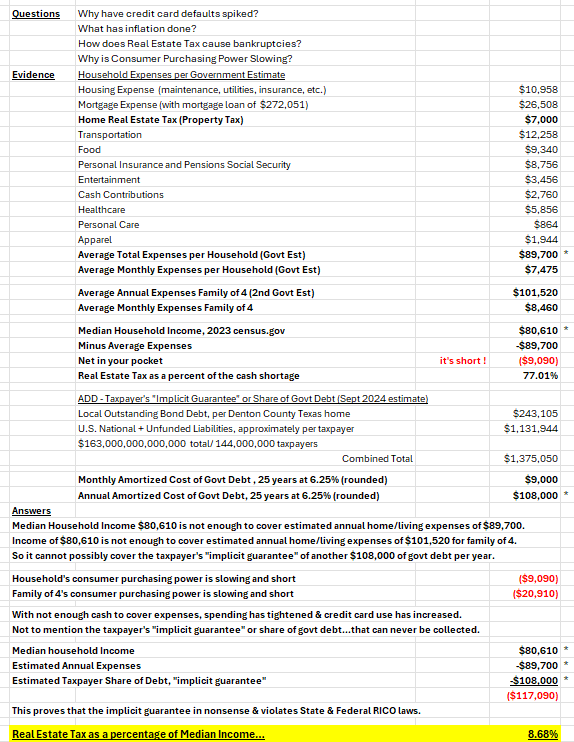
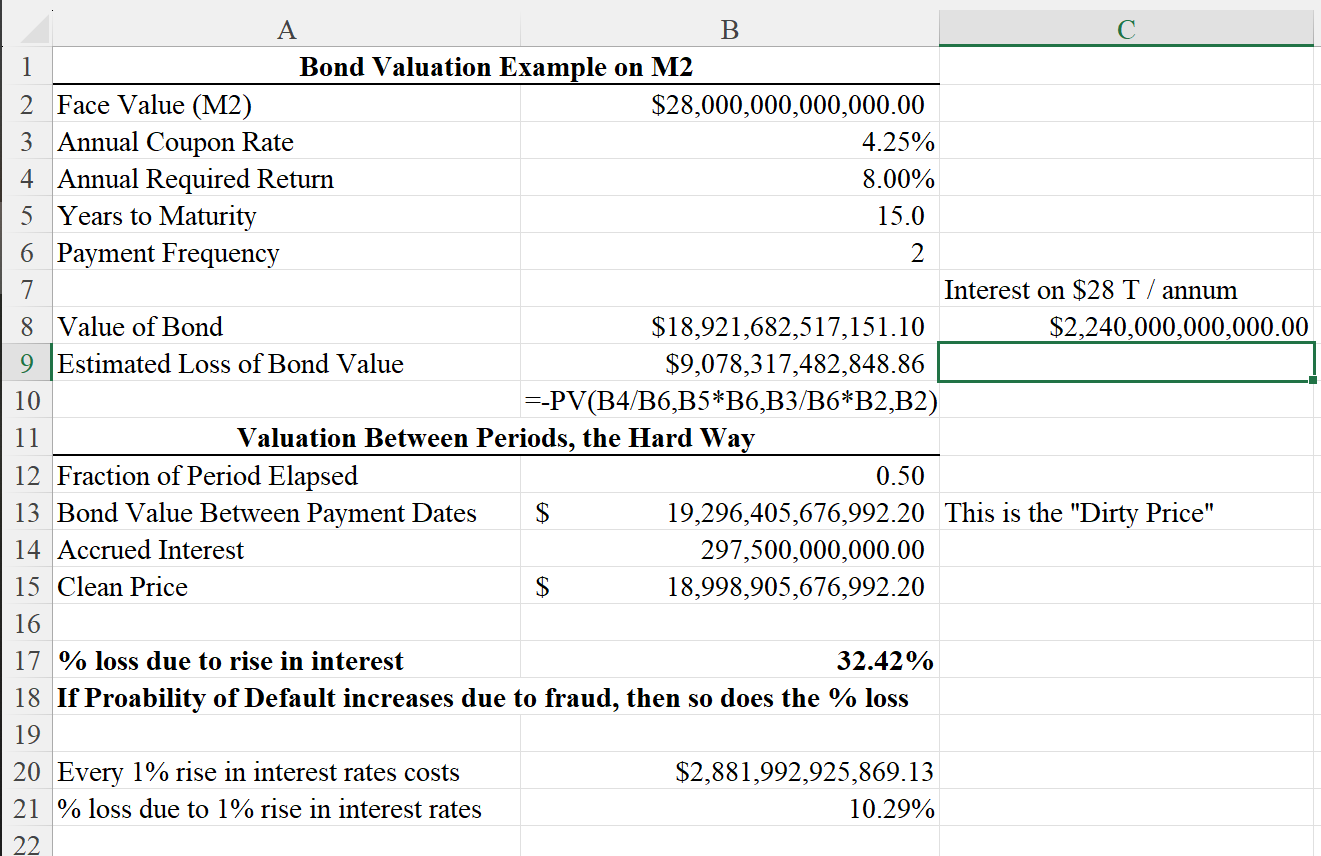
… the evidence of mass accounting fraud continues to grow, and the ramifications of this accounting fraud is what we as society are forced to pay in the form of inflation and compound interest to the point we are now at where the Median Household Income does not exist to pay for the interest never mind paying down the debt. The accounting fraud is at both the Federal Reserve level and the School District bonds as presented in The Privilege to Know.
According to Erased Evidence there's a building in Washington DC that shouldn't exist. The old post office pavilion was completed in 1899 with granite columns, a 315 ft clock tower, and vaulted ceilings with hand carved stone detail. It cost $3.2 million. The federal government built it without collecting a single dollar of income tax from American citizens. In fact, the federal government built the entire transcontinental railroad system, funded the Spanish American War, constructed the Library of Congress, and maintained a standing military across 45 states, all before 1913. That was the year the 16th Amendment was ratified, giving Congress the power to levy income tax on individuals. Before that, the official story is simple. Tariffs, excise taxes, and land sales covered everything. But the math doesn't match the buildings. Let me show you what I mean. In 1890, total federal revenue was approximately $43 million. The majority came from customs duties, roughly 57%, with internal excise taxes on alcohol and tobacco contributing another 30%. Land sales and miscellaneous fees made up the rest.
That same decade, the federal government funded the completion of multiple transcontinental rail lines, began construction on the Panama Canal infrastructure, built 27 new federal concourses, and expanded the Navy from 42 ships to 95. The USS Indiana, launched in 1893, cost $3 million. The pension building in Washington, completed in 1887, cost $886,000. The Montana State Capital, finished in 1902, required $485,000 in federal appropriations. The 1893 World's Columbian Exposition in Chicago, received $2.5 million in federal funding on top of private investment. Added up across one decade, and the numbers stop cooperating with the textbook explanation. Consider the scope. Between 1865 and 1913, the federal government constructed infrastructure that rivaled anything built in Europe. State capitals with domes larger than the US Capital. Concourses with marble imported from Italy. Post offices in towns of 3,000 people that featured granite facades and bronze fixtures. Custom houses in port cities designed like Roman temples. This wasn't frugality. This was abundance. And the people who kept the books remembered. There was a generation of Americans who worked inside the system before 1913. Clerks and accountants and treasury officials who saw how the money moved. Many lived long enough to be interviewed in the 1930s and 1940s by researchers trying to capture the last memories of the old economy. Their testimonies were filed in archives. Most were never widely published.
Mary Duckati was born in 1868 in Boston. She worked as a clerk in the US Customs House from 1889 to 1922. In a 1938 interview preserved at the Massachusetts Historical Society, she described the ledger system used to track tariff revenue. When asked if tariffs alone could have funded federal operations, she paused, then said there were other columns. We called them special appropriations. The interviewer asked what that meant. She said the records were kept separately and she wasn't permitted to discuss them. John Hastings, a Treasury Department accountant from 1895 to 1931, gave a similar account in a 1941 oral history archived at the Library of Congress. He described reviewing federal expenditure reports in the early 1900s and noticing surpluses that didn't correspond to tariff collections. When he asked his supervisor, he was told those funds came from asset management and were not part of public appropriations. He never saw a full accounting. These weren't conspiracy theorists. They were clerks. They filed receipts, tracked expenditures, and balanced ledgers. And what they described doesn't match the official story we've been taught. The official story says tariffs covered everything. In 1880, tariff revenue was $186 million. In 1900, it was $233 million. In 1910, $333 million. Modest growth over 30 years. But during that same period, federal expenditures ballooned from $268 million in 1880 to $694 million in 1910. The gap widened every year. So, where did the money come from? The textbooks say efficiency, economic growth, and careful management. But the buildings say something else. They say there was wealth flowing into federal coffers from sources that were either not publicly reported or were reported under categories that obscured their true origin. Wealth substantial enough to fund construction that still stands today over a century later as some of the most durable infrastructure in America. And in 1913, everything changed. The 16th Amendment passed. The federal income tax became law. And within a generation, the people who remembered how it worked before were gone. But the receipts aren't gone. The appropriations records, the custom ledgers [The Shadow Ledger], the treasury reports from 1870 to 1912 are sitting in the national archives. The testimonies from elderly clerks and accountants are preserved in university libraries and historical societies. The buildings themselves are still standing, physical proof that something funded them. The question isn't whether the government had money before 1913. Clearly, it did. The question is where that money came from and why the people who knew were never asked to explain it in detail before they died. Let me show you a specific case that makes the funding question impossible to ignore. The 1893 World's Columbian Exposition in Chicago. 27 million visitors across 6 months. Over 200 buildings spread across 630 acres, known as the White City. Official records show the federal government appropriated $2.5 million for the exposition. The total cost of construction, however, was documented at approximately $28 million.
Private investors in the city of Chicago covered most of that. But here's where the numbers fracture. The government building alone, a neoclassical structure covering 420,000 sq. ft. was funded entirely by federal appropriations. According to the official exposition directory published in 1893, construction cost was $400,000. The building featured a central dome 120 ft in diameter, Corinthian columns carved from Indiana limestone, and interior halls finished with marble and gold leaf. It was completed in 18 months. For context, the Washington Monument, a simpler obelisk structure, took 36 years to complete and cost $1.2 million. The government building at the White City was exponentially more complex, built in half the time for a third of the cost and then demolished 6 months later. The construction contracts are in the archives. I found them because I was looking for something else. Tracing appropriations records for the Bureau of Public Buildings. The primary contractor for the government building was George Fuller Company of Chicago. The contract dated March 1891 specifies materials, labor schedules, and payment terms. What it doesn't specify is the funding source beyond federal appropriation. Treasury records from 1891 show total customs revenue for that year at $219 million. Total federal expenditures were $365 million, meaning the government was already running a deficit of $146 million. Yet somehow an additional $400,000 was allocated for a temporary exhibition building with no permanent federal purpose. That's one building.
Across the same decade, similar appropriations appear for projects in multiple cities. The 1901 Pan-American Exposition in Buffalo received $500,000 in federal funding. The 1904 Louisiana Purchase Exposition in St. Louis received $5 million. Each time, massive neoclassical structures built quickly, displayed briefly, then demolished completely. And each time the funding appears in federal ledgers without clear sourcing. But here's the detail that researchers have struggled with since 1910. In that year, a congressional investigation led by Senator Nelson Aldridge examined federal expenditures from 1890 to 1909. The investigation was part of broader debates over monetary policy and the creation of a central banking system. The committee reviewed Treasury records, appropriations bills, and departmental budgets. According to the final report published in 1911, there were discrepancies. The committee identified approximately $340 million in expenditures across the two-decade period that were categorized as internal improvements and special appropriations but lacked detailed sourcing and customs or excise records. The report noted these funds appear to come from land management receipts and asset liquidation but did not provide itemized accounting. The report recommended further investigation. No further investigation occurred. The 16th amendment was ratified 2 years later. There were people who noticed. Albert Gallatin, a Treasury official from 1897 to 1920, gave testimony to the Aldrich Commission in 1910.
His testimony archived at the National Archives describes a secondary ledger system used by the Treasury Department to track what he called non-tariff revenue. When asked to specify the sources, he stated they included mineral rights on federal land, harbor fees, and lease payments from railroad companies operating on public land grants. Gallatin calculated these sources generated approximately 15 to 20 million annually between 1890 and 1910. Substantial, but nowhere near the $340 million gap the Aldrich Commission identified. When pressed, Gallatin testified that certain revenue streams were classified under administrative discretion and not included in public reports. The commission asked him to provide documentation. He stated the records were maintained separately by the Office of the Secretary of the Interior and were not part of standard Treasury ledgers. The commission requested those records. According to the hearing transcripts, the request was referred to the Interior Department. No records were ever produced. Then there's the matter of the gold reserves. In 1890, the US Treasury held approximately $190 million in gold reserves to back the currency. By 1900, despite funding the Spanish American War and massive infrastructure projects, reserves had grown to $600 million. By 1910, reserves stood at $1.5 billion. The official explanation is economic growth and increased international trade driving gold inflows through tariff payments. But tariff revenue during that period grew by roughly $100 million, not $1.3 billion. The gold had to come from somewhere. There were elderly miners and land office clerks who remembered Samuel Burch, a Colorado land office administrator from 1883 to 1919, who was interviewed in 1942 by a WPA researcher. The interview is preserved at the Denver Public Library. Burch described a system where mining companies paid royalties directly to the federal government for extraction on public lands. He estimated the payments totaled millions annually, but said the accounting was handled through different channels, not the regular books. (1) When the interviewer asked what happened to those payments, Burch said, "They went to Washington. We sent the reports quarterly. I don't know what they did with them after that. Those reports should be in the archives. I've looked. They're not there." Which brings us to 1913 and the question nobody asked loudly enough. If the system was working, if tariffs and excise taxes and land sales were covering everything, why did the federal government suddenly need to tax individual incomes? (2) The official justification was progressive reform. The idea was simple. Wealth inequality had grown too extreme, and a graduated income tax would distribute the burden more fairly. The 16th amendment passed the Senate 77 to 0 and was ratified by 42 states by February 1913. President Taft signed it into law. By October, the Revenue Act of 1913 established a 1% tax on incomes above $3,000, rising to 7% on incomes above $500,000. The rhetoric was about fairness, but the timing suggests replacement, not addition.
Consider what else happened in 1913. The Federal Reserve Act was signed into law in December, creating a central banking system and fundamentally reshaping how the government managed money. Two massive financial restructurings in a single year. One gave the government the power to tax individuals directly. The other gave a private consortium of banks control over the money supply and credit. Together, they replaced a system that had operated for over a century with something entirely new. Opposition to the income tax came primarily from rural states and agricultural interests. Senator William Bora of Idaho argued in congressional debates that income tax would shift financial power from states to the federal government and create a permanent administrative apparatus for monitoring citizens. He warned it would make the government dependent on a revenue source that required perpetual expansion. He was right, but he lost. The amendment passed, and within a decade, the old systems paper trail began to disappear. In 1921, a fire in the Treasury Department annex destroyed records related to internal revenue collections from 1890 to 1910. The official cause was listed as electrical malfunction. In 1924, the Office of the Secretary of the Interior conducted an internal audit and determined that land management records from before 1913 were incomplete and unreliable. Many were discarded. In 1933, as part of New Deal reorganization, the Treasury consolidated its ledger systems and reclassified pre-1913 revenue categories. Special appropriations became miscellaneous receipts. The detailed sourcing was lost. By the 1940s, the clerks and accountants who had worked in the old system were dying. A few were interviewed, mostly by local historical societies or WPA researchers documenting regional economies. Their testimonies describe a system more complex than the textbooks admit. Revenue from sources that weren't publicly reported. Ledgers kept separately. Instructions not to discuss certain appropriations. But their testimony was filed, not published. It sat in archives for decades, and by the time researchers began asking these questions in the 1970s and 1980s, the witnesses were gone. There had to be one in every federal office in 1950. A woman born in 1870, hired as a clerk in 1890, retired in 1935, living past 80. She would have filed the receipts, tracked the expenditures, seen the separate ledgers. She would have watched the system change in 1913 and known exactly what was being replaced. When her grandchildren asked how the government paid for everything before income tax, she might have started to explain. Tariffs, yes, but also land revenues, mineral royalties, harbor fees, things that weren't always reported the same way, and her grandchildren, educated in schools that taught the simplified version, would have nodded politely and assumed she was misremembering. Because by the 1950s, the textbooks had already decided. Before 1913, the government was small and frugal, funded by tariffs and little else. After 1913, it became modern and expansive, funded by income tax. Clean narrative, simple timeline. Except the buildings from before 1913 are still standing. The granite and marble post offices, the state capitals with imported stone and bronze doors, they're still here, physical proof that the government wasn't small and wasn't frugal. The timeline compresses cleanly. The 1870s through 1890s, infrastructure built at a scale and speed that official revenue doesn't fully explain. The 1890 census captures everyone alive during the transition. Then the only copy is destroyed. The 1910 Aldrich Commission identifies a $340 million gap, requests documentation, receives none. The 1910s and 1930s, records are destroyed or reclassified. The 1940s and 1950s, the last witnesses die. By the 1970s, the paper trail is incomplete and the living memory is gone. But the Treasury annual reports from 1870 to 1912 are still accessible at the National Archives. The Aldrich Commission hearings are published and searchable. The testimonies from elderly clerks are preserved in historical society collections across the country. The appropriations records for federal buildings are filed in the Library of Congress. We know what they built. We know what the official budget was. We don't know where all the money came from. And the people who did know chose silence or were never asked or were asked too late. The archive is public. The ledgers are readable. The buildings are still standing. And the question is still waiting the same way it's been waiting for over a century for someone willing to read the receipts instead of the textbooks.
(1) “The accounting was handled through different channels, not the regular books”.
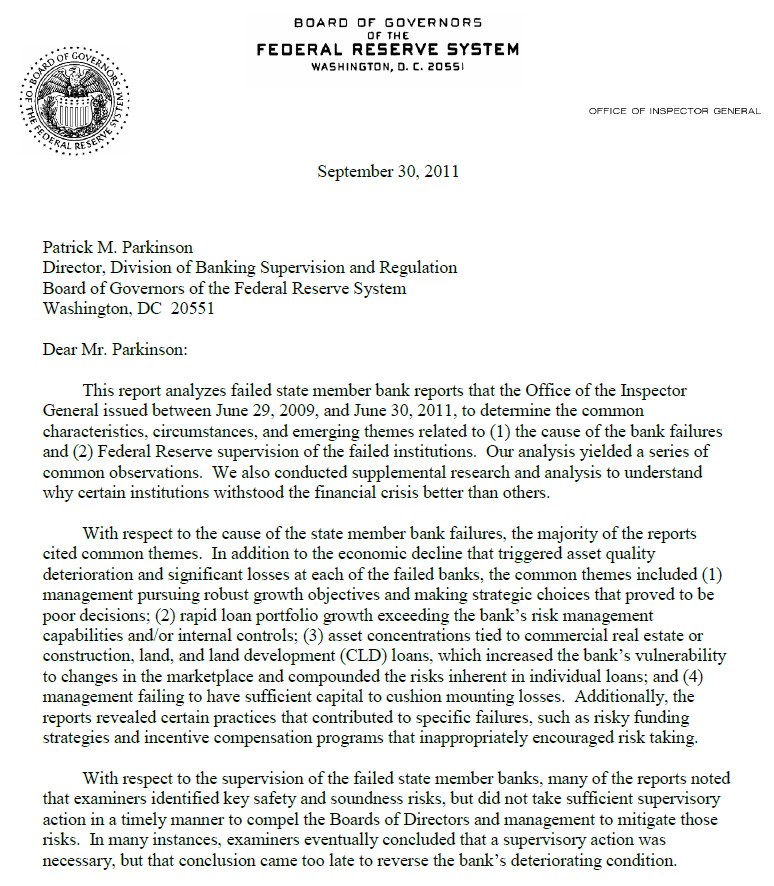
Now the pattern and practice to defraud comes into focus.
The auditing firms, which are not doing audits as required in law, use the exact same pattern and practice to provide cover to the fraudsters being “we are not given all the information” as if that will provide the audit firm cover from the fact they are aiding and abetting a criminal conspiracy to defraud and they should be held accountable including jail because the vast majority of school districts that raise bonds are guilty of bond fraud and why we filed Criminal Complaints and why The Amicus Brief is now at the Supreme Court of Texas, and as of this morning, so is our Response to the lies of opposing counsel, DCAD and Don Spencer.
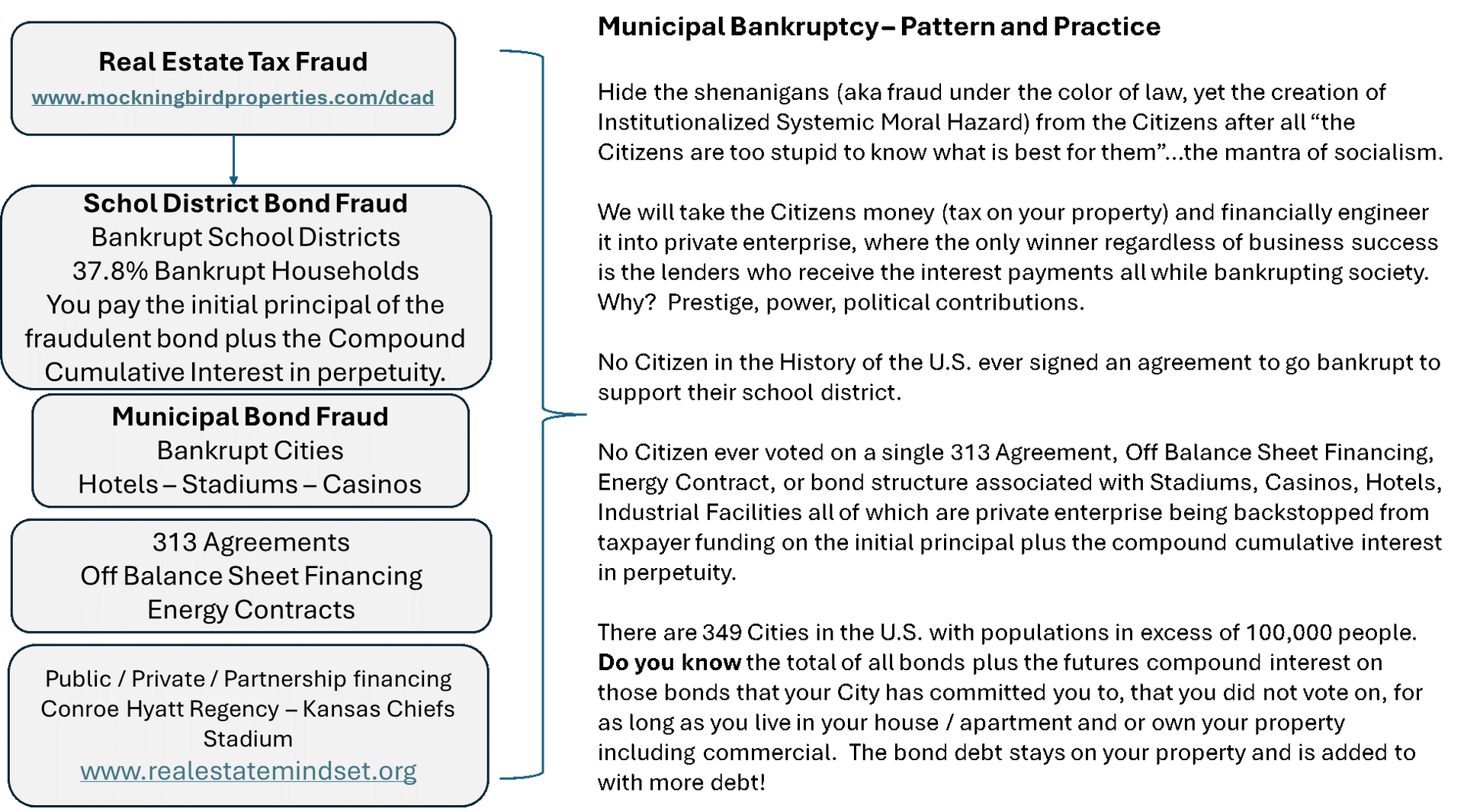
The evidence of accounting fraud and thus bond fraud is also shown in multiple independent reports from across the U.S. including:
- JCAD Comprehensive Report
- JCAD and GISD Violations of Law
- California Policy Center – Bond Study – including bond election fraud
- Residential Appraisal Testimony
- 313 Agreements, Energy Contracts, Off Balance Sheet Financing (CommonSenseLaw.org)
- Conroe Hyatt Regency Convention Hotel - Bond (PPP) Financing (RealEstateMindset.org)
- School Funding Issues – BOND FRAUD
What remains as a result of generations of accounting fraud and bond fraud is one unavoidable financial question that no institution has answered.
One SIMPLE Question: Where is the money going to come from to pay off the fraud that is growing compound cumulative by the second?
No institution has answered that question.
- Not the Federal Reserve with its 23,000 employees,
- Not the school districts,
- Not the teachers who are also being defrauded,
- Not the school district superintendents who commit accounting fraud and bond fraud,
- Not the bond underwriters,
- Not the appraisal districts,
- Not the Chief Appraisers who collude with the school districts to cook the books,
- Not the bond architects,
- Not the rating agencies, and
- Not the attorneys who are aiding and abetting a criminal conspiracy to defraud.
This One SIMPLE Question, cannot be answered by any of these individuals or institutions which begs the 2nd question, which is… for what purpose does any of these organizations exist??
(2) Why did the federal government suddenly need to tax individual incomes?
The answer with regard to both the federal government and the state government is to transfer the wealth of society (Equity Stripping) into the pockets of the fraudsters, banksters, and co-conspirators. Let’s create an illusion of benefiting society and use that illusion to steal society’s money. The Fed’s illusion…Wouldn’t it be great if we can protect banks against bank runs? The School Districts illusion…We are doing this for the children. Don’t you want to help the children? In both cases the illusion is the creation of mass fraud upon society.
Today the local record of accounting fraud and bond fraud intersects with national financial mathematics, meaning the arithmetic is now exposing both the intent to defraud and the intended delay of discovery of the fraud that has metastasized into the 401Ks and Pensions. The median household income (MHI) does not exist to pay off the interest on the fraud, never mind paying off the fraud, and the result will be massive write-downs and mass bankruptcies if the solution is not put in place quickly.
These are the words of Robert F. Kennedy...
The Anti Apathy!
"There is discrimination in this world and slavery and slaughter and starvation. Governments repress their people; millions are trapped in poverty while the nation grows rich, and wealth is lavished on armaments everywhere. These are differing evils, but they are the common works of man. They reflect the imperfection of human justice, the inadequacy of human compassion, our lack of sensibility towards the suffering of our fellows. But we can perhaps remember -- even if only for a time -- that those who live with us are our brothers; that they share with us the same short moment of life; that they seek -- as we do -- nothing but the chance to live out their lives in purpose and happiness, winning what satisfaction and fulfillment they can.
Surely, this bond of common faith, this bond of common goal, can begin to teach us something. Surely, we can learn, at least, to look at those around us as fellow men. And surely, we can begin to work a little harder to bind up the wounds among us and to become in our own hearts brothers and countrymen once again. The answer is to rely on youth -- not a time of life but a state of mind, a temper of the will, a quality of imagination, a predominance of courage over timidity, of the appetite for adventure over the love of ease. The cruelties and obstacles of this swiftly changing planet will not yield to the obsolete dogmas and outworn slogans. They cannot be moved by those who cling to a present that is already dying, who prefer the illusion of security to the excitement and danger that come with even the most peaceful progress.
It is a revolutionary world we live in, and this generation at home and around the world has had thrust upon it a greater burden of responsibility than any generation that has ever lived. Some believe there is nothing one man or one woman can do against the enormous array of the world's ills. Yet many of the world's great movements, of thought and action, have flowed from the work of a single man. A young monk began the Protestant reformation; a young general extended an empire from Macedonia to the borders of the earth; a young woman reclaimed the territory of France; and it was a young Italian explorer who discovered the New World, and the 32 year-old Thomas Jefferson who proclaimed that "all men are created equal."
"These men moved the world, and so can we all. Few will have the greatness to bend history itself, but each of us can work to change a small portion of events, and in the total of all those acts will be written the history of this generation. Each time a man stands up for an ideal, or acts to improve the lot of others, or strikes out against injustice, he sends forth a tiny ripple of hope, and crossing each other from a million different centers of energy and daring, those ripples build a current that can sweep down the mightiest walls of oppression and resistance.
Few are willing to brave the disapproval of their fellows, the censure of their colleagues, the wrath of their society. Moral courage is a rarer commodity than bravery in battle or great intelligence. Yet it is the one essential, vital quality for those who seek to change a world that yields most painfully to change. And I believe that in this generation those with the courage to enter the moral conflict will find themselves with companions in every corner of the globe.
For the fortunate among us, there is the temptation to follow the easy and familiar paths of personal ambition and financial success so grandly spread before those who enjoy the privilege of education. But that is not the road history has marked out for us. Like it or not, we live in times of danger and uncertainty. But they are also more open to the creative energy of men than any other time in history. All of us will ultimately be judged, and as the years pass we will surely judge ourselves on the effort we have contributed to building a new world society and the extent to which our ideals and goals have shaped that event.
Our future may lie beyond our vision, but it is not completely beyond our control. It is the shaping impulse of America that neither fate nor nature nor the irresistible tides of history, but the work of our own hands, matched to reason and principle, that will determine our destiny. There is pride in that, even arrogance, but there is also experience and truth. In any event, it is the only way we can live."
- Robert F. Kennedy
Repeal all property tax in favor of the Uniform States Sales Tax.