



DEBT JUBILEE: When X Cannot Sustainably Exceed Y
By Mitchell Vexler, October 5, 2026
The test is simple.
Over the long run, the demand on money (X) cannot sustainably exceed the available capacity to pay it (Y).
The Question Is Not Whether You Agree With Me
A viewer recently asked me a direct question: How are you going to succeed? My answer begins with a principle that is much larger than any one lawsuit, appraisal district, school district, bond issue, or government agency: people must be able to see the records, follow the money, test the numbers, and reach their own conclusions.
The objective is not to ask anyone to accept my conclusions. The objective is to make the evidence understandable enough that anyone can ask the same questions. If the evidence is wrong, show where it is wrong. If the evidence is right, then the public has both the right and the obligation to understand what follows from it.
That is why I use the shorthand X > Y.
X is the cumulative demand on available money: taxes, debt service, interest, fees, recurring obligations, and other claims on future income. Y is the sustainable ability of households, businesses, and ultimately taxpayers to fund those claims. A system can temporarily operate with X above Y through refinancing, new borrowing, monetary expansion, asset sales, higher taxes, or rising valuations. It cannot do so forever without adjustment.
Why This Matters Now
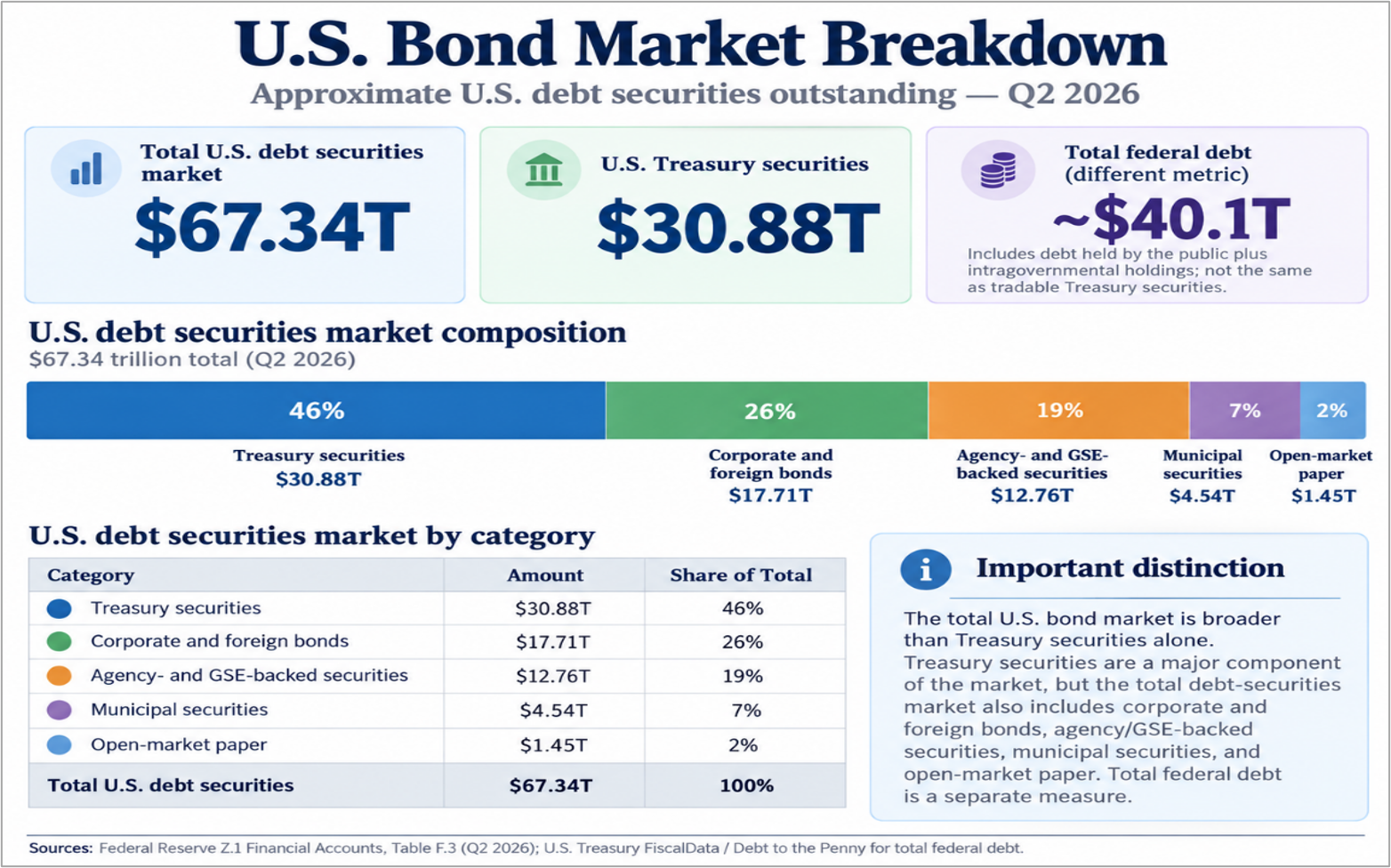
The scale of the U.S. debt markets alone is large enough that small errors in valuation, cash-flow assumptions, or debt-service capacity can have enormous consequences. The Federal Reserve's Financial Accounts reported approximately $67.34 trillion of U.S. debt securities outstanding at the end of 2026 Q2. Of that amount, about $30.88 trillion was Treasury securities, $12.76 trillion was agency- and GSE-backed securities, $17.71 trillion was corporate and foreign bonds, $4.54 trillion was municipal securities, and $1.45 trillion was open-market paper. SIFMA separately reported approximately $31.8 trillion of Treasury securities outstanding as of August 2026.
These are not interchangeable numbers. Treasury securities, total federal debt, municipal debt, corporate bonds, consumer debt, equity-market capitalization, and derivatives measure different things. They should not simply be added together as if they were one balance sheet. But they do demonstrate how deeply interconnected modern finance has become and why credibility, valuation discipline, and the ability to service obligations matter.
My Property-Tax and Bond Thesis
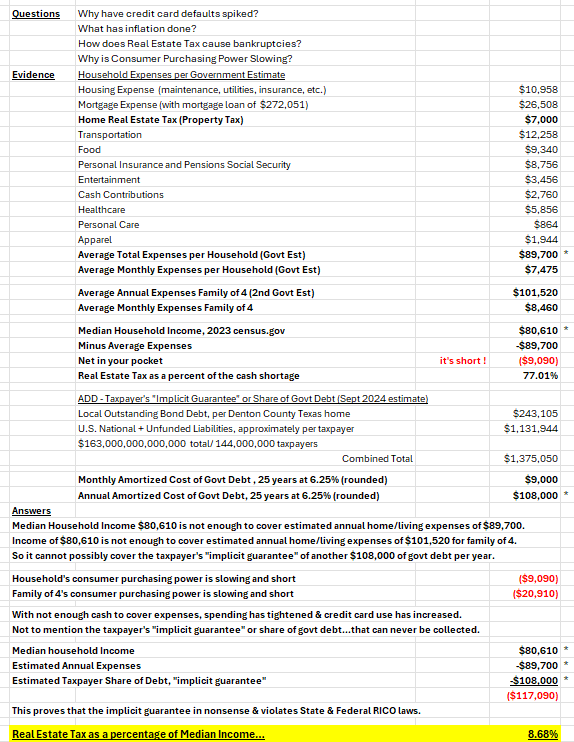
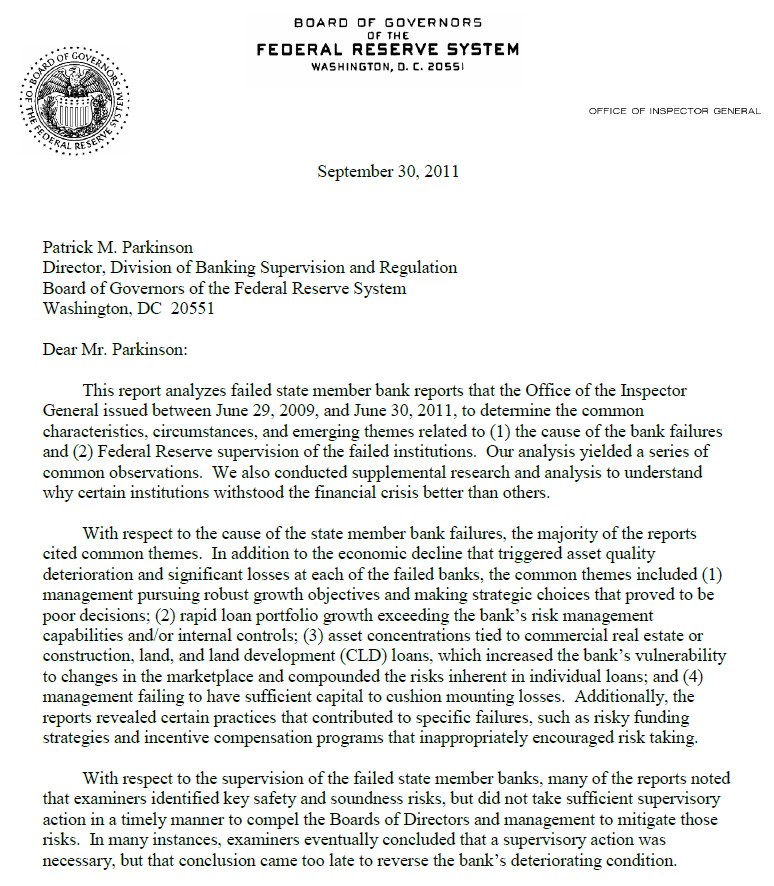
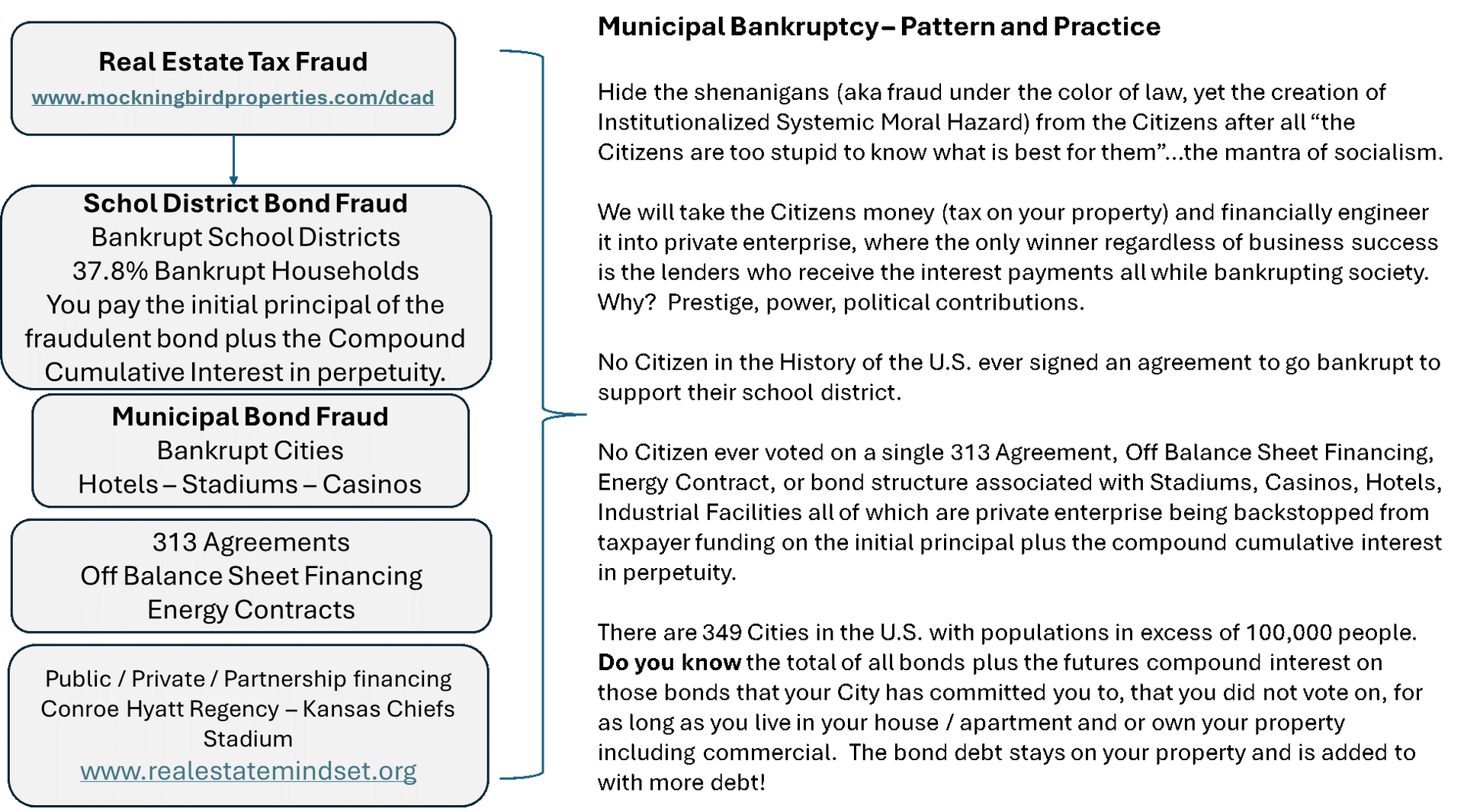
My work began with property valuation and taxation. The evidence I have assembled alleges that appraisal practices, governmental budgeting, and school-district bond financing can interact in ways that separate taxable values and debt obligations from sustainable household economics. Those allegations are disputed and are matters for courts, investigators, public officials, and the public record to test.
The U.S. Supreme Court docketed No. 26-179, Mitchell Vexler, et al. v. Don Spencer, Chief Appraiser, Denton Central Appraisal District, et al., on August 10, 2026. The case record, related filings, open-records materials, and supporting evidence are part of the public verification process. I have also continued to submit records and complaints to governmental authorities and to seek independent data verification.
The point is not that every tax, every appraisal, every school bond, or every public obligation is fraudulent. The point is that any obligation that depends on valuation, projected tax collections, or future household income should be capable of being reconstructed from source records and tested against the ability to pay.
The Bond Credibility Chain: A Verification Problem
The Bond Credibility Chain was built around that verification problem. The question is not simply what a bond says on its face. The question is whether the principal, interest, tax base, valuation assumptions, refinancing requirements, and household cash-flow capacity can be reconciled from beginning to end.
In that framework, the goal is not to destroy principal. It is the opposite: identify the greatest amount of principal that can be supported by real, sustainable cash flow. Where the numbers do not reconcile, the gap must eventually be recognized somehow. The longer recognition is delayed, the larger the risk that adjustment occurs through disorderly default, inflation, forced taxation, or abrupt repricing.
Perspective on the scale of why X > Y
As of the latest comparable Federal Reserve data for 2026 Q2, total U.S. debt securities outstanding were about $67.34 trillion. That breaks down as follows: Federal Reserve.
| U.S. Debt Securities Outstanding, Q2 2026 | Trillions |
|---|---|
| Treasury Securities | $30.88T |
| Agency & GSE-Backed Securities | $12.76T |
| Corporate & Foreign Bonds | $17.71T |
| Municipal Securities | $4.54T |
| Open Market Paper | $1.45T |
| TOTAL Outstanding, Q2 2026 | $67.34T |
We distinguish three different numbers and then lay out the fact that what is stated as total debt is not even close. See numbers 4 - 8 below.
- Total federal debt / national debt: about $40.1 trillion in late September 2026. That includes debt held by the public plus intragovernmental holdings, so it is not the same thing as tradable Treasury bonds. Recent Treasury Fiscal Data reporting put total public debt outstanding at about $40.10T. IndexBox
- Tradable/outstanding Treasury securities: roughly $31–32 trillion. The Fed reported $30.88T at Q2 2026, while SIFMA's more current August figure was $31.8T outstanding. Federal Reserve
- Total U.S. bond/fixed-income market: roughly $65–67 trillion, depending on the exact definition and reporting date. The Federal Reserve's broad debt-securities measure was $67.34T at Q2 2026. Federal Reserve SIFMA separately reported the U.S. fixed-income market at $61.2T for 2025 under its market definition. Municipal securities alone are about $4.5T outstanding by the Fed/SIFMA measure, while corporate bonds are around $12T under SIFMA's narrower corporate-bond series.
- None of the above numbers include the potential losses on the value of the U.S. stock market which in early 2026 was estimated at $70.6 Trillion.
- None of the above numbers include total global derivatives estimated at $840 Trillion with an estimated $34 Trillion net value.
- None of the above numbers include the total value of options, futures, traded daily on U.S. shores or globally.
- None of the above numbers include the total U.S. Consumer debt estimated at $18.9 Trillion.
- None of the above numbers include the total global consumer debt is approximately $151.8 Trillion, which is part of the overall private debt that includes household liabilities.
- None of the above numbers include the paper devaluation of property, given houses have gone up roughly 100% in the last 5 to 6 years, which we have shown is by fraudulent overvaluation to extract over taxation. To get back to the values just 5 years ago, would require roughly a 50% devaluation on the value of a home.
- Global debts are roughly $348 Trillion according to the Institute of International Finance, and this amount was expanded by nearly $29 trillion in a single year.
It is very easy to see as volatility increases how a 20-30% revaluation might cause a potential loss of $93 Tillion. No one knows exactly but we modeled Dynamic Contagion Level 1 and Level 2 (loss of sovereign credibility) both of which are driven off of volatility which could itself compound if the governments are not proactive.
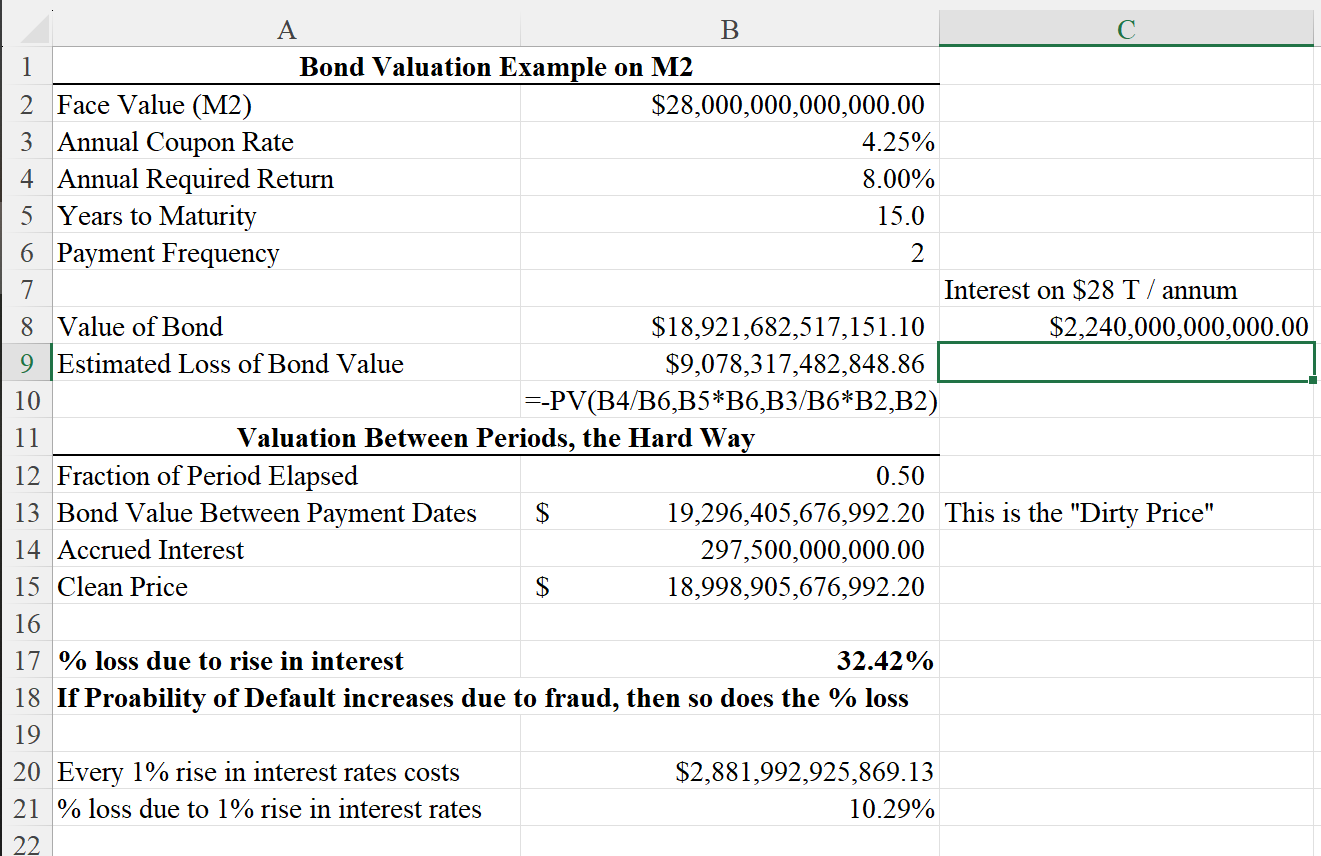
The true valuation of the bonds can be determined via the goal of saving as much original principal as possible which is what the Bond Credibility Chain XLSX was designed to do. X > Y
We are dancing on a Razor Blade!
No one knows the exact trigger point but there is no shortage of triggers. One unnecessary little slip can cause major hemorrhaging.
Energy shocks, i.e. cost of fuel, are typically short term, but no one knows what is to be.
The Managing Director of the International Monetary Fund (another organization that should be terminated along with the Federal Reserve), announced on April 9, 2026. "All roads now lead to higher prices and slower growth."
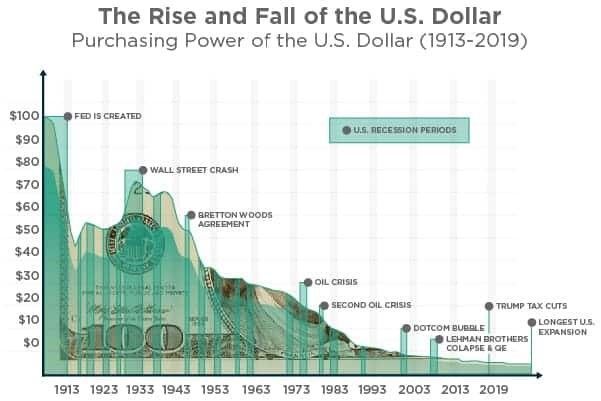
The forecasts created by these cast of cartoon characters may in this instance be partially true but not even close to the truth as seen in the quantification above. One must realize that their existence (FED, IMF, EU, World Bank, Central Banks, CADs, School Districts) is a direct result of the property taxes and income taxes which is then levered up by printing money (FED vis U.S. Treasury) which requires interest on the bonds, which said interest is the exaction of society’s equity, thus the equity stripping of society as the bonds and cumulative compound interest thereon cannot be paid off. This cast of cartoon characters exist to steer a false narrative which allowed and promoted that X could be greater than Y and thus allowed and promoted the stripping of your equity. The printing of money not backed by assets is the inflation that every one of us sees, feels and touches in our daily lives. This is the exact proof that the X cannot be greater than the Y.
In the last 20 days, the following was accomplished:
- Introduction to the Constitutional Fidelity Project (link)
- Terminal Failure – Who Verifies the System (Storm Summit Presentation)
- Bond Credibility Chain (Storm Summit Presentation) (Video) X > Y
- Las Vegas Retail Margin of Safety – Comparing Households to Retail and Hotels X > Y
- How Much Stronger Would Main Steet Be Without the Fraud? X > Y
- Dangerous Intellectuals Interview with General Holt X > Y
- Request for U.S. Treasury Data Verification X > Y
- Dead to Rights – Government Internal Records
- Sunk Cost Entrenchment
- Daniela Cambone Interview X > Y
The nexus of all this effort and the Bond Credibility Chain XLSX is the fact that over the long run X cannot be greater than Y, meaning the demand on the money (X) cannot be greater than sustainable availability of funds (Y) being the funds from households.
This thesis keeps growing as the fraudulent debt and interest on that debt keeps compounding. Society is burning over $4 Billion per day just on U.S. Treasury Interest and interest on the fraudulent school district bond debt. This is not paying off any debt. The debt is growing compound cumulative which can never be paid off.
What I Mean by a Debt Jubilee
That brings me to the idea of a debt jubilee. I am not proposing the indiscriminate cancellation of every debt. I am proposing that debt restructuring should be considered where an obligation is shown, after verification and due process, to be unsupported, unsustainable, unlawfully created, or dependent on assumptions that cannot be reconciled with the underlying capacity to pay.
Historically, societies have used debt cancellation or restructuring to address situations in which debt burdens became socially or economically destabilizing. Ancient Near Eastern rulers issued debt-remission decrees; the Biblical Jubilee tradition is one of the best-known historical references. Modern restructuring takes different forms: bankruptcy, sovereign restructurings, negotiated write-downs, mortgage modifications, and statutory relief programs.
A modern American debt-jubilee framework, if one were ever adopted, should be rules-based rather than political or arbitrary. It should distinguish between supportable principal and unsupported claims, protect due process, preserve legitimate creditor rights, and prevent the relief itself from becoming a new source of moral hazard.
Five Rules for Any Serious Jubilee Framework
- Verify the debt genealogy. Every material obligation should be traceable to the underlying principal, interest terms, collateral or tax base, refinancing history, and source of repayment.
- Preserve supportable principal first. The objective should be to protect the maximum principal that sustainable cash flow can actually support, not to erase obligations merely because repayment is inconvenient.
- Separate restructuring from concealment. Losses that already exist economically should not be hidden through serial refinancing, unsupported valuation increases, or shifting obligations off balance sheet.
- Address tax treatment explicitly. Under current federal law, canceled debt is generally taxable income unless an exception or exclusion applies. Any statutory jubilee would therefore need explicit rules for cancellation-of-debt taxation so that relief does not simply create a new tax liability.
- Require transparency and independent verification. A restructuring process should publish the assumptions, source data, formulas, and treatment of creditors and taxpayers so that the public can independently test the result.
TIME IS OF THE ESSENCE
Property Tax Reform Is Part of the Same Discussion
My policy proposal is to replace property taxation with a uniform state sales-tax structure designed to be transparent at the point of transaction rather than dependent on recurring subjective valuation of privately owned property.
The broader principle is that taxation should be understandable, measurable, and constrained by the sustainable capacity of the population paying it. The same standard should apply whether the obligation is called a property tax, a bond payment, an assessment, a fee, or an interest charge.
Civic Literacy Is the First Line of Defense
The most durable reform is not a particular political slogan or institution. It is a population that knows how to inspect records. Citizens should know how to make open-records requests, obtain budgets and bond documents, read appraisal records, compare official numbers, and ask officials to reconcile conflicts.
That is the purpose of the Constitutional Fidelity Project and the public evidence repositories I have helped build. The goal is to make the material navigable enough that an eighth grader, a retiree, an attorney, an accountant, or a bond professional can ask the same basic question: Where did the number come from, and can it be independently reproduced?
A Note on the Federal Reserve and Inflation
I am deeply critical of monetary expansion and of policies that allow nominal financial claims to grow faster than productive capacity and household income. But precision matters. The Federal Reserve does hold substantial assets, including Treasury securities and agency mortgage-backed securities, on its balance sheet. My criticism is therefore not that the balance sheet contains no assets; it is that monetary and credit expansion can change the quantity and price of financial claims in ways that shift purchasing power, encourage leverage, and delay recognition of unsustainable obligations.
Inflation is experienced by households as a loss of purchasing power. Whether a particular episode of inflation comes from monetary policy, fiscal policy, supply constraints, energy prices, credit expansion, or some combination of those factors, the X > Y test remains relevant: recurring claims on household income cannot permanently compound faster than the income available to satisfy them. Ignoring these facts as the Federal Reserve does, in favor of its existence, only exacerbates the problem and eventual mass defaults.
The Historical Warning Is About Representation and Consent
American history is full of disputes about taxation, representation, and the limits of governmental power. The Library of Congress documents how colonial resistance to the Stamp Act centered on the principle that taxation imposed without representation and consent violated political rights. That history should not be reduced to a slogan; it should remind us that taxation and public debt ultimately rest on legitimacy.
Legitimacy requires more than a statute or a bond certificate. It requires public institutions to be able to explain what they are doing, produce the records supporting it, and operate within constitutional and legal limits.
The Practical Questions:
'What do you mean by a debt jubilee?' I mean a verification-first restructuring process for debt that cannot be supported by the underlying cash flow or that is shown through due process to be legally or factually defective. The purpose is to preserve as much legitimate principal as possible while stopping the compounding of obligations that cannot be paid.
'Who decides what is legitimate?' It must be determined through transparent records, independent verification, applicable law, contractual rights, and due process.
'Why now?' Because the scale and interconnectedness of debt markets make delay more expensive. When credibility is strong, markets can absorb mistakes. When credibility weakens, price discovery can become rapid and disorderly.
'What can an ordinary person do?' Learn how to obtain the records, follow the money, test the numbers, and refuse to outsource your civic judgment.
Conclusion: Test X Against Y
A debt jubilee is not the starting point. Verification is the starting point. A jubilee is one possible tool after verification reveals a debt burden that cannot be reconciled with lawful, sustainable cash flow.
The ultimate reform is the discipline of refusing to pretend that X can permanently exceed Y. If the demand on money grows faster than the sustainable availability of money, the imbalance will eventually be resolved. The only question is whether it is resolved transparently and deliberately, or through crisis.
My preference is simple: produce the records, preserve what is supportable, correct what is not, and let the public see the math.
Public Resources
Constitutional Fidelity Project: https://constitutionalfidelityproject.org/.
DCAD / case information and evidence repository: https://www.mockingbirdproperties.com/dcad.
Open-records education and public research resources: https://www.realestatemindset.org/.
Verification Notes and Sources
1. U.S. Supreme Court, Docket No. 26-179. Docketed August 10, 2026; Mitchell Vexler, et al. v. Don Spencer, Chief Appraiser, Denton Central Appraisal District, et al. Source
2. Federal Reserve, Financial Accounts of the United States, Z.1 (September 11, 2026), Table F.3. Reports total U.S. debt securities outstanding of about $67.34 trillion at 2026 Q2, including about $30.88 trillion of Treasury securities. Source
3. SIFMA, U.S. Treasury Securities Statistics. Reports about $31.8 trillion of U.S. Treasury securities outstanding as of August 2026. Source
4. IRS Topic No. 431, Canceled Debt - Is It Taxable or Not?. Explains that canceled debt is generally taxable unless an exception or exclusion applies. Source
5. Library of Congress, 'No Taxation Without Representation'. Documents colonial objections to taxation imposed without representation and consent. Source
6. Texas Tax Code, Chapter 6. Describes appraisal-district governance and the role of participating taxing units; it is more precise to describe the statutory governance relationship than to characterize appraisal districts as 'owned' by school districts.
Source